












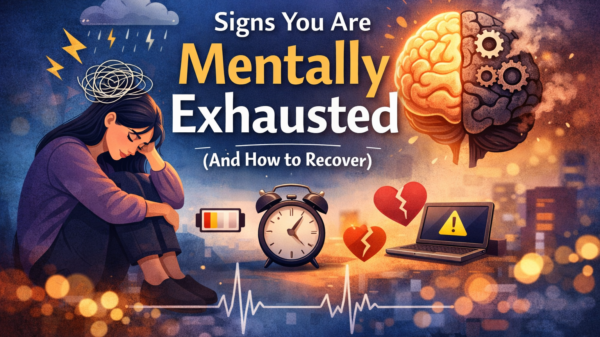







Mental exhaustion is becoming one of the most common yet ignored struggles in modern life. Between work pressure, family responsibilities, social expectations, and constant digital stimulation, many people are running on empty without even realizing it.
If you often feel drained, unmotivated, or emotionally numb, you may not just be “tired.” You might be mentally exhausted.
In this comprehensive guide, we’ll explore the signs of mental exhaustion, its causes, and most importantly, how to recover from mental fatigue naturally and effectively.
What Is Mental Exhaustion?
Mental exhaustion, also known as mental fatigue, is a state of extreme cognitive and emotional tiredness. It happens when your brain has been under prolonged stress or overload without proper rest and recovery.
Unlike physical tiredness, sleep alone may not fix mental exhaustion. It affects your:
- Thoughts
- Emotions
- Focus
- Motivation
- Decision-making ability
If left untreated, mental exhaustion can lead to burnout, anxiety, or even depression.
Common Causes of Mental Exhaustion
Before identifying the signs, it’s important to understand what causes mental fatigue.
1. Chronic Stress
Long-term stress from work, relationships, or financial issues constantly activates your nervous system.
2. Overworking Without Breaks
Working long hours without proper rest or boundaries drains your cognitive energy.
3. Emotional Burden
Caring for others, dealing with conflicts, or suppressing emotions can silently exhaust you.
4. Lack of Sleep
Poor sleep quality weakens your brain’s ability to restore itself.
5. Digital Overload
Constant scrolling, notifications, and multitasking reduce your brain’s attention span and increase fatigue.
Signs You Are Mentally Exhausted
Here are the most common warning signs of mental exhaustion you should never ignore.
1. Constant Tiredness — Even After Sleeping
You wake up tired. You go to bed tired. You feel tired all day.
If sleep doesn’t refresh you anymore, your exhaustion may be mental, not physical.
2. Difficulty Concentrating
You struggle to focus on simple tasks. You reread the same sentence multiple times. You forget small details.
Mental fatigue directly impacts cognitive performance and productivity.
3. Emotional Numbness or Irritability
You feel emotionally disconnected. Small things trigger big reactions. You lose patience quickly.
When your brain is overloaded, emotional regulation becomes difficult.
4. Lack of Motivation
Things that once excited you now feel like a burden. You procrastinate more than usual. Even basic tasks feel overwhelming.
Mental exhaustion drains your internal drive.
5. Brain Fog
Brain fog is one of the strongest signs of mental fatigue. It feels like:
- Slow thinking
- Confusion
- Forgetfulness
- Trouble making decisions
- Your brain is simply overloaded.
6. Increased Anxiety
You feel restless or uneasy. You overthink minor issues. Your mind doesn’t “switch off.”
Mental exhaustion often heightens anxiety levels.
7. Changes in Sleep Patterns
You either:
Sleep too much
OR
Struggle with insomnia
Mental overload disrupts your natural sleep rhythm.
8. Physical Symptoms
Mental exhaustion can show up physically as:
- Headaches
- Muscle tension
- Stomach issues
- Low immunity
Your mind and body are deeply connected.
9. Social Withdrawal
You avoid social interactions. You cancel plans. You prefer isolation not for peace, but because you lack energy.
10. Feeling Hopeless or Cynical
If exhaustion continues for too long, it can turn into emotional burnout. You may start feeling:
- Hopeless
- Negative about everything
- Detached from goals
This is a serious sign that recovery is necessary.
Mental Exhaustion vs Burnout: What’s the Difference?
Although related, they are slightly different.
Mental exhaustion is a temporary state caused by stress or overload.
Burnout is long-term emotional, physical, and mental depletion usually linked to work or chronic stress.
Ignoring mental fatigue can eventually lead to burnout.
How to Recover From Mental Exhaustion
The good news? Recovery is possible. But it requires intentional changes.
1. Prioritize Deep Rest (Not Just Sleep)
Rest doesn’t only mean sleeping. It includes:
- Mental rest (reduce screen time)
- Emotional rest (express your feelings)
- Social rest (spend time alone if needed)
- Sensory rest (limit noise and stimulation)
Give your brain real recovery time.
2. Create Boundaries
Learn to say no. Limit work hours. Reduce unnecessary commitments.
Protecting your energy is not selfish — it’s essential.
3. Practice Digital Detox
Take breaks from:
- Social media
- News
- Constant notifications
Even a few hours daily without screens can reset your brain.
4. Improve Sleep Hygiene
To improve mental recovery:
- Sleep at the same time daily
- Avoid screens before bed
- Keep your room dark and cool
- Avoid caffeine late in the day
Quality sleep strengthens cognitive repair.
5. Move Your Body
Light exercise like:
- Walking
- Stretching
- Yoga
Increases blood flow to the brain and reduces stress hormones.
6. Practice Mindfulness or Meditation
Mindfulness calms the nervous system and reduces mental clutter.
Start with just: 5–10 minutes of deep breathing daily.
Consistency matters more than duration.
7. Talk About It
Suppressing emotions increases mental pressure.
Talk to:
- A trusted friend
- A family member
- A therapist
Expressing feelings reduces emotional burden.
8. Break Tasks Into Small Steps
When everything feels overwhelming:
- Write down tasks
- Divide them into smaller actions
- Complete one step at a time
Small wins rebuild motivation.
9. Nourish Your Brain
Your brain needs fuel. Include:
- Omega-3 rich foods
- Nuts and seeds
- Fresh fruits
- Hydration
Balanced nutrition supports cognitive function.
10. Reconnect With Meaning
Ask yourself:
- What truly matters to me?
- What drains me unnecessarily?
- What can I simplify?
Sometimes exhaustion comes from living out of alignment.
How Long Does Mental Exhaustion Last?
Recovery time varies.
Mild mental fatigue may improve within a few days of rest.
Severe exhaustion or burnout can take weeks or even months, especially if stressors remain unchanged.
The key is consistency in self-care and lifestyle adjustments.
When to Seek Professional Help
If you experience:
- Persistent sadness
- Panic attacks
- Severe insomnia
- Loss of interest in life
- Thoughts of self-harm
Seek professional support immediately.
Mental exhaustion can overlap with anxiety disorders or depression. Professional guidance can accelerate recovery.
Preventing Mental Exhaustion in the Future
Prevention is easier than recovery.
Daily habits to protect mental health:
- Set clear boundaries
- Take short breaks during work
- Limit multitasking
- Schedule “no responsibility” time
- Practice gratitude
- Maintain supportive relationships
Small daily habits create long-term resilience.
Final Thoughts
Mental exhaustion is not laziness. It is not weakness. And it is not something to ignore.
Your brain works tirelessly every day — processing emotions, solving problems, making decisions, and carrying responsibilities. When it asks for rest, listen.
Recognizing the signs of mental exhaustion early can prevent serious burnout and emotional breakdown.
Slow down. Reassess. Recover.
Because your mental well-being is not a luxury, it is the foundation of everything else in your life.
Frequently Asked Questions (FAQs)
The earliest signs of mental exhaustion usually include constant tiredness, difficulty concentrating, irritability, lack of motivation, and brain fog. Many people also notice emotional sensitivity or feeling overwhelmed by small tasks.
If these symptoms continue for several weeks without improvement, it may indicate deeper mental fatigue.
Physical tiredness improves with rest or sleep. Mental exhaustion does not.
If you wake up feeling unrefreshed, struggle to focus, feel emotionally drained, and lose motivation even after sleeping, you are likely experiencing mental fatigue rather than normal tiredness.
Recovery time depends on severity.
Mild mental fatigue: A few days of proper rest and stress reduction
Moderate exhaustion: A few weeks of lifestyle adjustments
Severe burnout: Several months, especially if stressors remain unchanged
Consistency in self-care and boundary setting speeds up recovery.
Not exactly.Mental exhaustion is usually temporary and caused by short-term stress or overload. Burnout is a more severe, long-term condition often related to chronic workplace or emotional stress.
If mental exhaustion is ignored, it can eventually develop into burnout.
Yes. Mental exhaustion can increase anxiety levels. When your brain is overloaded, it becomes harder to regulate thoughts and emotions, leading to overthinking, restlessness, and heightened stress responses.
Managing stress early helps prevent this cycle.