













What if improving your health and losing weight were not about what you eat, but when you eat?
Intermittent fasting is a relatively recent phenomenon, becoming one of the most popular health trends in recent years. This eating pattern is followed by many people to lose weight, enhance metabolism, and boost overall health. In contrast to the usual diets, intermittent fasting does not emphasize the foods that one consumes. Rather, it is concerned with the timing of your meals. If you want a broader look at eating well overall, this healthy diet guide is a useful starting point.
Numerous health professionals assume that intermittent fasting may be used to enhance digestion, hormone equilibrium, and long-term health. The most interesting thing is that it is not complex, flexible, and simple to follow.
This guide will discuss what intermittent fasting is, how it works, its benefits, and how beginners can safely start.
What is Intermittent Fasting?
Intermittent fasting (IF) refers to an eating behavior in which you alternate between periods of eating and fasting. You do not spend the day eating, but rather have a routine.
As an example, you can eat within a period of 8 hours and fast within a period of 16 hours. This is among the most popular approaches, termed the 16:8 method.
The fasting process means that your body does not get new calories during the fasting period. This consequently makes it start utilizing stored fats as its energy source, which can aid in the process of weight loss.
Intermittent Fasting has some important characteristics.
-
Pays attention to the time of meals
-
Assists the body in burning up fat stores
-
Improves metabolism
-
Helps to maintain a healthy weight
Contrary to the strict diets, intermittent fasting does not imply counting calories all the time. Nevertheless, it is not in vain to eat healthy foods within the eating window.
How Intermittent Fasting Works
When you consume food, glucose is the primary source of energy consumed by your body. Any surplus is stored as either glycogen or fat.
When a person is fasting, the insulin in the body decreases, and the body begins to use the stored fat as a source of energy. This is referred to as metabolic switching.
What Occurs in the Body When One is Fasting
Lower Insulin Levels
During fasting, the insulin levels fall. Reduced levels of insulin enable the body to burn more fat.
Fat Burning Increases
As the level of glucose in the body decreases, the body stores fat as an alternative source of energy.
Cellular Repair Begins
Fasting can also trigger a process of repairing cells within the body, which enables the body to get rid of the damaged cells.
Hormone Changes
Some of the hormones, which aid fat burning and muscle building, can rise.
These variations explain why numerous individuals view weight reduction and improved metabolic well-being with intermittent fasting. According to the National Institute on Aging, the key mechanism behind these benefits is this metabolic switch, where the body shifts from using stored glucose to burning fat for fuel.
Common Forms of Intermittent Fasting
Intermittent fasting can be practiced in many ways. The novice is to begin with the easiest and most convenient way.
The 16:8 Method
It is the most used intermittent fasting technique.
You go 16 hours without eating and 8 hours during which you eat.
Example schedule
-
Eating window: 12 PM – 8 PM
-
Fasting window: 8 PM – 12 PM the next day
During fasting, you can drink:
-
Water
-
Black coffee
-
Green tea
-
Herbal tea
This technique is simple since much of the fasting time occurs when one sleeps.
The 12:12 Method
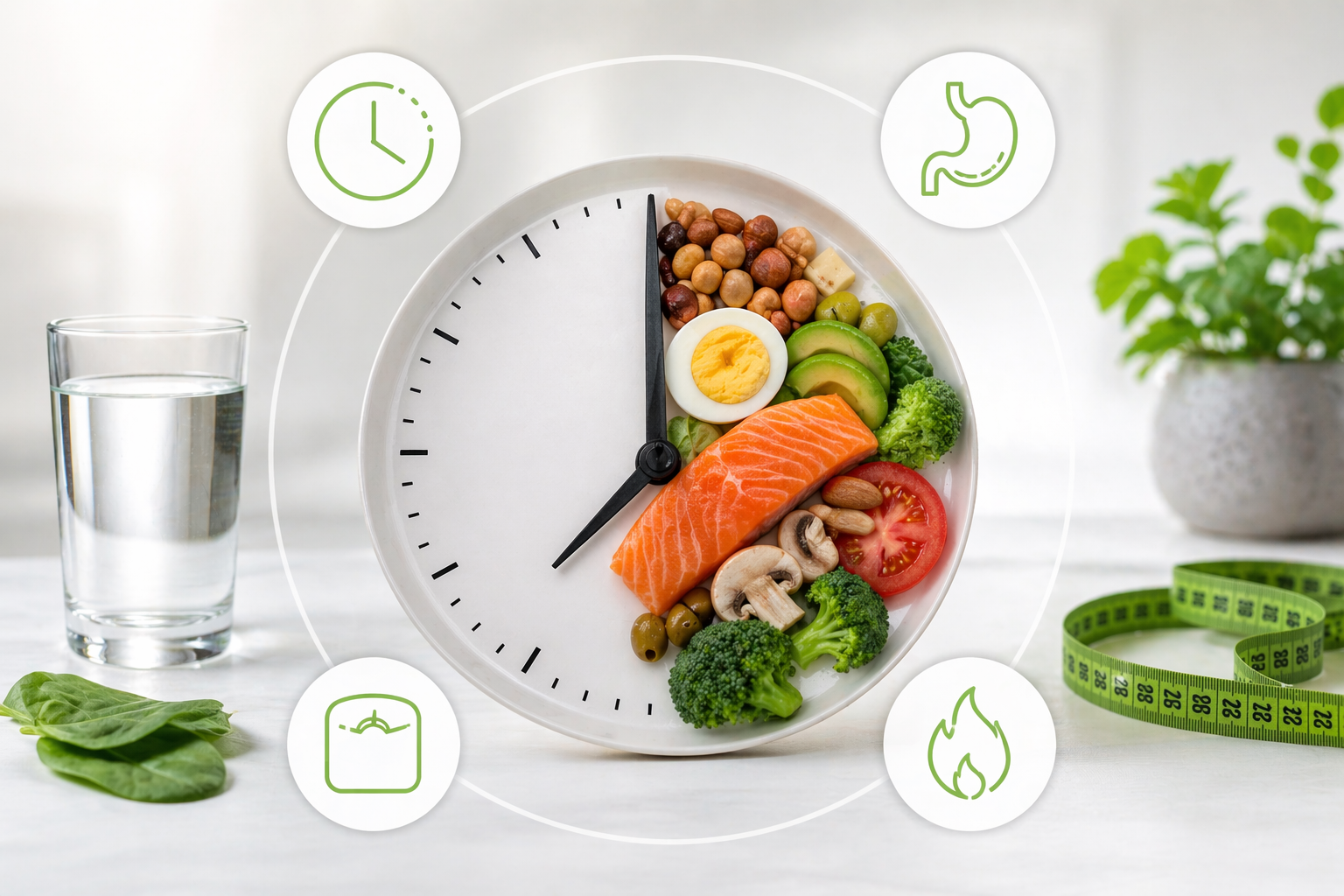
Intermittent fasting combined with healthy eating can support weight loss and overall wellness.
This is a perfect approach for beginners.
You have 12 hours to fast and 12 hours to eat.
Example
Eat between 8 AM and 8 PM.
Break between 8 PM and 8 AM.
It enables the body to gradually get used to fasting.
The 5:2 Method
In this approach:
-
You eat normally for 5 days.
-
You cut down calories on 2 days to approximately 500–600 calories.
The two low-calorie days are not supposed to be consecutive.
Intermittent Fasting Advantages
When done properly, intermittent fasting has a variety of health advantages.
Supports Weight Loss
Weight loss is one of the largest reasons why people attempt intermittent fasting.
Fasting assists in lowering the calories and makes the body utilize the stored fats.
It is much easier than a conventional diet since it makes people less likely to snack in between meals. For more practical strategies, check out these weight loss tips.
Improves Metabolism
Intermittent fasting can be used to enhance metabolic health.
It can support:
-
Improved blood sugar levels
-
Improved insulin sensitivity
-
Lower likelihood of metabolic disorders
Helps Control Blood Sugar
Intermittent fasting can be used to stabilize blood sugar levels since it reduces insulin levels.
This may help prevent unexpected energy slumps and sugar cravings.
Supports Brain Health
Certain studies indicate that fasting could be beneficial to the brain and mental acuity.
It can assist the body in synthesizing proteins that aid the well-being of brain cells.
Promotes Good Eating Habits
Intermittent fasting can be a great help to people:
-
Reduce late-night eating
-
Avoid unnecessary snacks
-
Be more conscious of what we eat
Such habits can eventually result in more favorable lifestyle choices.
The Best Foods to Eat During Intermittent Fasting
Although fasting is concerned with the timing of meals, the quality of food is still important.
Eating healthy foods can enhance outcomes and sustain energy levels.
Protein-Rich Foods
Protein keeps you full and helps keep your muscles.
Examples
-
Eggs
-
Chicken
-
Fish
-
Lentils
-
Yogurt
Healthy Fats
Healthy fats help in providing energy when one is fasting.
Examples
-
Avocado
-
Nuts
-
Olive oil
-
Seeds
High-Fiber Foods
Fiber aids in digestion and fullness.
Examples
-
Vegetables
-
Fruits
-
Whole grains
-
Beans
Hydrating Drinks
It is important to remain hydrated.
Good options include:
-
Water
-
Lemon water
-
Green tea
-
Herbal tea
Sweet drinks should be avoided when fasting since they terminate the fast.
Beginner Intermittent Fasting Tips
When you have just started intermittent fasting, you should take your time and listen to your body.
Begin With a Short Fasting Period
Start with a 12-hour fast and then gradually build up.
This will assist your body to adapt comfortably.
Stay Hydrated
Consume a lot of water during the day.
Hydration can be used to curb hunger during the fasting hours.
Eat Balanced Meals
You should have meals that include:
-
Protein
-
Healthy fats
-
Fiber
-
Vitamins
Balanced meals are useful to sustain energy.
Avoid Overeating
Other beginners consume an excessive amount within the eating window.
Attempt to consume regular amounts of food and shun overindulgence in junk food.
Get Enough Sleep
Sleep has a significant role to play in the management of weight and metabolism.
Goal: 7–8 hours of good sleep every night.
Possible Side Effects of Intermittent Fasting
The majority of individuals can adjust themselves to intermittent fasting within several days. Nonetheless, a few novices might develop mild side effects.
The typical short-term side effects are:
-
Hunger
-
Headaches
-
Fatigue
-
Irritability
Such symptoms are generally alleviated as the body adjusts.
In case of persisting symptoms, it might be beneficial to change the timing of fasting.
Who Should Not Do Intermittent Fasting?
Intermittent fasting is not appropriate for all of us.
Individuals who ought to see a healthcare expert are:
-
Breastfeeding or pregnant women
-
People with diabetes
-
Patients who have a history of eating disorders
-
Individuals who are on drugs need food
Always select a plan that would help you in meeting your health requirements.
Conclusion
Intermittent fasting is a straightforward and effective type of eating that can help to lose weight, enhance metabolism, and improve overall health.
Through meal timing and not strict dieting, many individuals can sustain a long-term diet.
Novices need to start with a moderate approach and either the 12:12 or the 16:8 method, and work on eating balanced and nutritious meals.
Intermittent fasting, when used with healthy lifestyle practices, physical activity, and appropriate sleep, can become a potent tool for improved health and wellness. Pairing it with a structured workout routine can further support your weight loss goals.
Frequently Asked Questions (FAQs)
Is intermittent fasting safe for beginners?
Yes, intermittent fasting is usually safe in healthy adults, provided it is done correctly. The transition can be facilitated by arranging shorter fasting periods.
Is it possible to drink coffee when intermittent fasting?
Yes. Black coffee without sugar or milk is usually allowed during fasting periods.
How many days to see the results of intermittent fasting?
Others can see the difference within 2–4 weeks, particularly when coupled with healthy dieting and exercise.
Will intermittent fasting reduce belly fat?
Intermittent fasting can be used to supplement a balanced diet and active lifestyle to reduce overall body fat, including belly fat.