





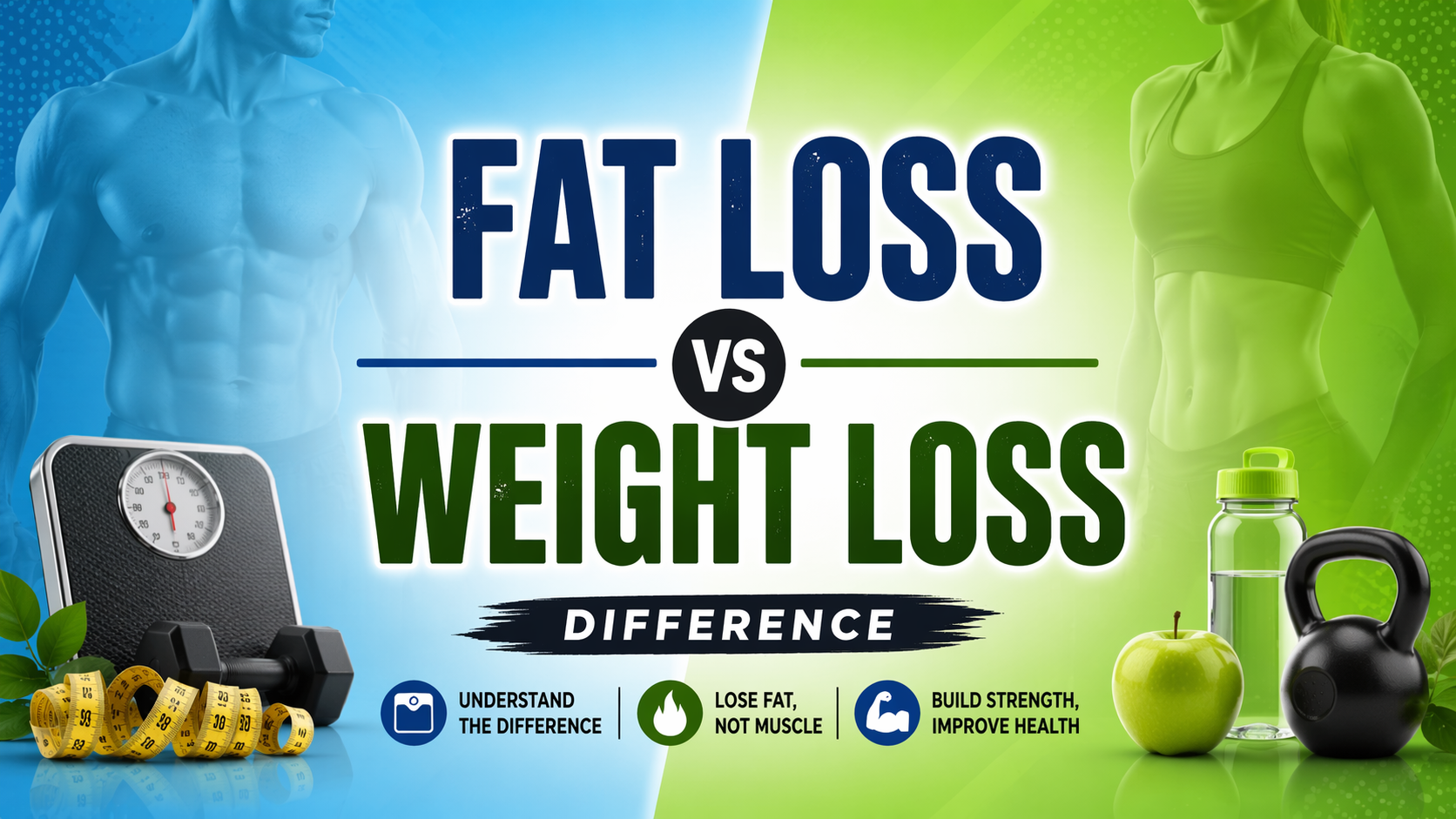
If you’ve been working hard but aren’t seeing the body changes you expected, you may be focusing on the wrong goal.
Weight loss doesn’t always mean fat loss, and understanding the difference could make all the difference when it comes to fitness goals. For people looking to get healthier, they will often use fat loss and weight loss interchangeably. However, there is a significant difference between the two. Knowing the difference between fat loss and weight loss can make all the difference in your fitness journey and results. Let’s explain in a simple, clear, and practical manner.
What is Weight Loss?
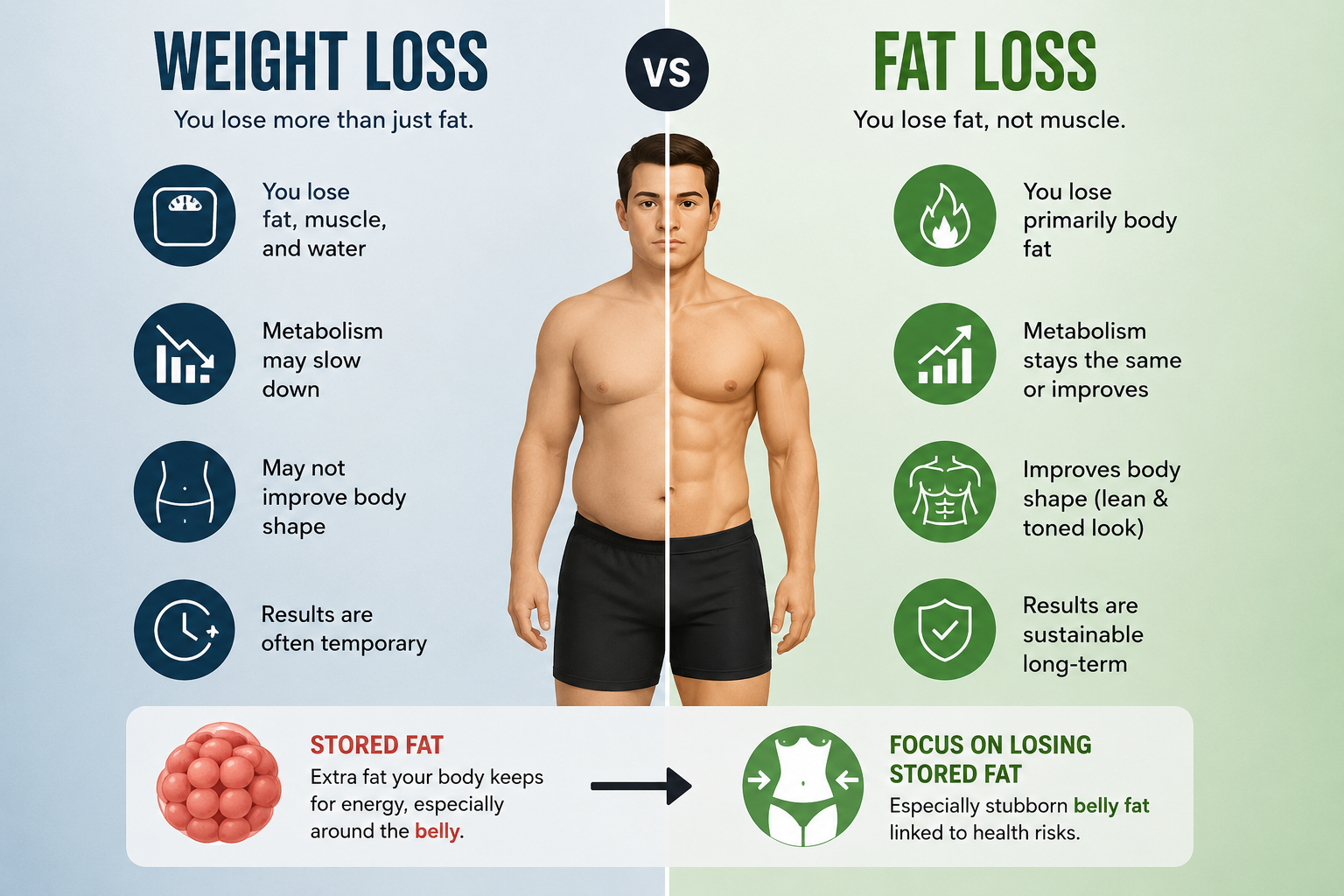
Weight loss is just losing weight altogether. This includes:
- Body fat
- Muscle mass
- Water weight
- Bone density (in extreme cases)
Why being slim doesn’t necessarily mean you are in good health. Rapid weight loss can be a motivator, but it can also have its drawbacks:
- Loss of muscle can slow your metabolism.
- A person may have a variation in water weight from day to day, which can fool them into thinking they’re progressing.
- You may look “smaller” but not necessarily leaner or toned.
What is Fat Loss?
Fat loss actually means the loss of fat and not lean muscle. While many people announce their desire to “lose weight”, this is the objective that they really want. There are two types of fat in your body:
- Non-essential fat: Used for energy and waste heat.
- Stored fat: Body fat that is stored in areas such as the belly, thighs, and hips for energy.
If you’re specifically struggling with stubborn belly fat, check out this guide on how to lose belly fat naturally for practical at-home strategies.
Why Fat Loss Matters More
Fat loss is more beneficial because it:
- Improves body composition
- Improves body image (toned and lean)
- Supports long-term health
- Helps maintain a strong metabolism
Fat Loss vs Weight Loss: Key Differences
Now, let’s look at the difference between fat loss and weight loss. To understand the difference between the two, let’s look at them side by side:
What You Lose
The body will lose weight, fat, muscle, and water. Protein: Maintains muscle tissue and aids in building it.
Impact on Body Shape
Weight Loss: May not improve appearance. Skin Tightening: Tightens the skin on the face and neck. Dryness: Dries out the skin.
Metabolism Effect
Weight Loss: If you suffer from a slow metabolism that results from losing muscle mass, then you can. Fat Loss: boosts or enhances metabolic rate.
Sustainability
Stress: Tends to be short-term. Fat Loss: More sustainable long-term.
Measurement
Weight Loss: Scale-based. Body Fat: Measured by body composition.
Understanding the Best Approach for Your Goals
If your objective is to improve your health, strength, and appearance, then a fat loss focus is a better objective than simply weight loss. Your muscles are extremely important! It: Supports your bones, helps with daily activities, and helps burn calories without exercising. The more muscles you have, the simpler it can be to maintain a healthy body. Conversely, if you lose muscle, you become weaker, and you will make slower progress.
To maximize your fat loss results, pairing it with muscle building is key. Learn how in this complete muscle-building guide.
The Real Goal
Instead of asking: How much does the loss of weight amount to?
Ask: “Am I losing fat and at the same time building muscle?”
That paradigm shift is a huge change.
Can You Lose Body Fat Without Losing Weight?
Yes, but this is where many people get confused. This is known as a body recomposition process. It happens when: You lose fat, your muscle building progresses, or continues.
Here are some signals you’ve been losing fat, even if you’re not seeing a change on the scales:
- Your clothes look better. Your clothes fit properly.
- You will look slimmer in photos. In photos, you’ll look slimmer.
- Your waist size is decreasing.
- You feel stronger.
Don’t worry about the scale not moving; progress is still being made.
Why the Scale Is Not Enough
The sole use of the scale can be frustrating and misleading because:
- Water weight will change day by day.
- Hormones can have an impact on weight.
- An increase in food consumption temporarily causes weight gain.
Don’t be obsessed with the scale; look at general patterns or other measures of success instead.
How To Determine Whether You’re Losing Fat Or Muscle
Understand the key difference between weight loss and fat loss
A regular weighing scale won’t tell you what exactly you’re losing. You need to have a better method of monitoring your progress.
- Progress Photos: Do front, side, and back photos consistently at the same time and under the same conditions. This will help you to see changes.
- Measurements: Monitor waist, hips, and other body parts. When the waist size is decreasing, it is most likely due to fat loss.
- How Clothes Fit: Often, your clothes speak louder than the scales.
- Body Fat Scales: These provide an approximate fat percentage. Not perfect, but useful over time.
- Skinfold Measurements are a relatively easy way to estimate the amount of fat, but it varies in accuracy depending on the method.
The principle is to be consistent, keep on track, and make comparisons over time.
For achieving real results, there is a smart approach. Here’s how to do it properly.
Building Strength is a Must
Without strength training, you’re at risk of losing muscle. Focus on:
- Squats
- Push movements (such as push-ups)
- Pull movements (like rows)
- Hip hinges (such as deadlifts)
Work out 3-4 times a week. It is important to include strength training in the fat loss program to maintain muscle mass. The Centers for Disease Control and Prevention (CDC) recommends 2 days of muscle-strengthening exercises a week for adults to help maintain optimal health and weight.
Continue to be in Moderate Calorie Deficit
The key to fat loss is to burn more calories than you consume, but not to the extreme. There is an optimal deficit size of:
- Protects the muscle.
- It’s simpler to keep up.
- It helps to avoid energy crashes.
Don’t follow crash diets; they are not beneficial.
Eat Enough Protein
Fat loss is all about your friend – protein. It helps:
- Preserve muscle
- Keep you full
- Support recovery
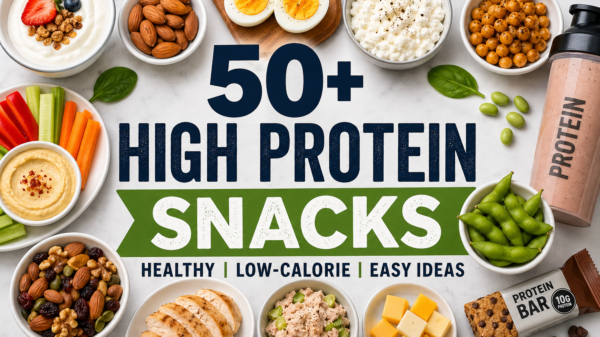
Pack up protein snacks to eat throughout the day—including: Chicken, Eggs, Fish, Yogurt, Lentils, or tofu.
Don’t Ignore Recovery
Rest and recovery are required. Make sure you:
- Sleep 7–9 hours daily
- Manage stress
- Take rest days
If you don’t recover, you may end up losing muscle and getting less fit. Frequent exercise is also a key to fat reduction. The World Health Organization recommends consistent physical activity for better overall health, weight management, and to lower the risk of chronic diseases.
Common Mistakes to Avoid
Some of the common mistakes that you should avoid are listed here. These are the common mistakes people make, which make it difficult for them to get it:
- Only focusing on the scale
- Running excessively, but not lifting weights
- Eating too little
- Skipping protein
- Not getting enough sleep
The Bottom Line
The fat loss vs weight loss difference is simple but powerful. Weight loss is just a number. Fat loss is a transformation. For a complete plan that combines all of these principles, this healthy workout routine to lose weight is a great next step.
Real progress is not just about becoming lighter. It’s about becoming healthier, stronger, and more confident.
Frequently Asked Questions (FAQs)
Yes, fat loss is usually better because it helps reduce body fat while keeping muscle, which improves both health and body shape.
Yes, this is called body recomposition. You may lose fat and gain muscle at the same time, so the scale may not change much.
Check progress photos, body measurements, how your clothes fit, and your strength levels instead of relying only on the scale.
Yes, cardio can help burn calories, but strength training is also important to protect muscle while losing fat.