








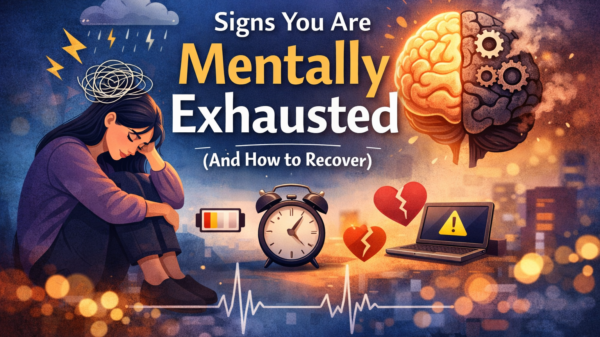









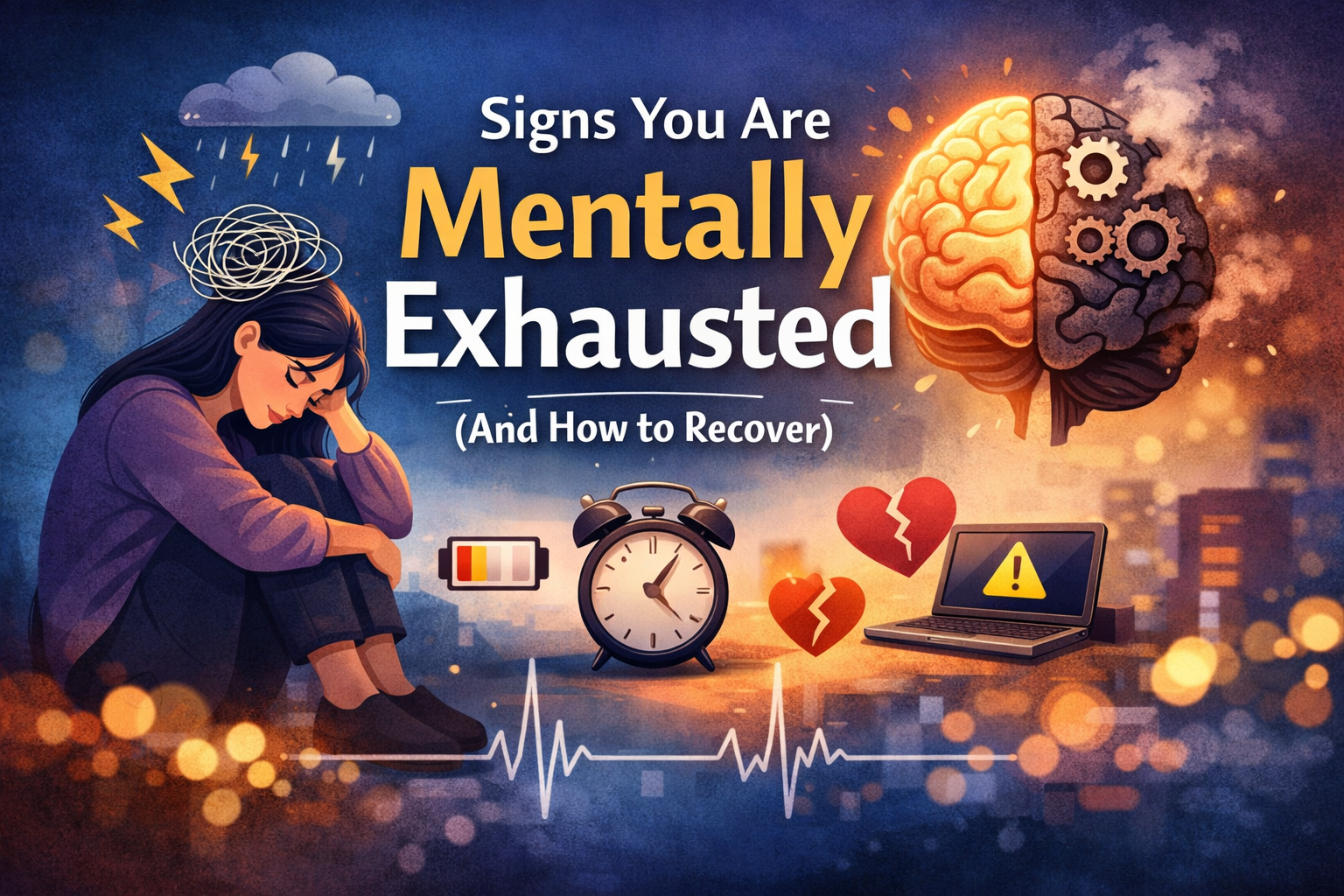
You’ve been staring at the same paragraph for 20 minutes, not because you’re lazy, but because your brain is running on empty.
Mental fatigue is one of the silent problems of life today. With the pressures of work, family life, society, and the constant stimulation from technology, many people are running on empty and not even realizing it. When you dread going to work, lack enthusiasm, or don’t feel emotions, it’s not only that you’re tired. You could be exhausted on your mental level. Learning stress management techniques early can make a significant difference.
In this comprehensive guide, we will examine the symptoms of mental fatigue, explore the reasons for it, and above all, how to get rid of mental fatigue naturally and effectively.
What is Mental Exhaustion?
Mental fatigue, or mental exhaustion, is a feeling of extreme tiredness of the brain and mind. It occurs when you’re experiencing prolonged stress or overload without adequate rest and recovery. Sleep does not necessarily cure mental fatigue. It affects your Thoughts, Emotions, Focus, Motivation, and decision-making ability. Untreated, mental fatigue can result in burnout, anxiety, or depression.
What’s Actually Exhausting Your Brain?
Before identifying the signs, it’s important to understand what causes mental fatigue.
1. Chronic Stress
Sustained stress from work, relationships, or finances keeps triggering your nervous system.
2. Overworking Without Breaks
Overworking without a break or limits saps your mental resources.
3. Emotional Burden
Taking care of other people, resolving conflicts, or trying to control one’s feelings can be draining and can be done without being noticed.
4. Lack of Sleep
Not sleeping well damages your brain’s self-repair capabilities.
5. Digital Overload
Constant scrolling, notifying, and multitasking shorten your brain’s attention span and result in fatigue.
Warning Signs Your Brain Is Overwhelmed
If you’re feeling mentally drained, you likely have some of these signs:
1. Excessive Sleepiness, Including After Sleep
You wake up tired. You’re exhausted when you get in bed at night. You can’t seem to get a full night’s sleep. If you are so exhausted that you can’t find a restful night’s sleep, then it might be a mental problem.
2. Difficulty Concentrating
Have trouble concentrating on basic activities. Re-read the same sentence several times. You lose focus on things. Mental fatigue has a direct effect on mental performance and productivity.
3. Emotional Numbness or Irritability
You are feeling “out of touch” emotionally. Little causes big reactions. Impatient. Your brain can only handle so much before emotional regulation begins to be a problem.
4. Lack of Motivation
Once you were interested, now you feel like you have to do it. What used to be interesting now feels like a chore. Procrastinates excessively. Simple tasks become too much. When you’re physically exhausted, your motivation and drive are depleted.
5. Brain Fog
Brain fog is a very good indicator of mental fatigue. It feels like: Slow thinking, confusion, forgetfulness, trouble making decisions. The brain just can’t cope.
6. Increased Anxiety
You are unsettled or uneasy. You think too much about small things. Your mind doesn’t “turn off.” Fatigue can often exacerbate anxiety.
7. Changes in Sleep Patterns
You either: Sleep too much OR Struggle with insomnia. If the brain is overworked, your sleep will be thrown off.
8. Physical Symptoms
Signs and symptoms of mental fatigue may manifest as: Headaches, Muscle tension, Stomach issues, and low immunity. Your brain and body work together and are closely linked.
9. Social Withdrawal
There is a lack of social interaction. You cancel plans. You want to be alone, but not for quiet; you are not full of energy.
10. Feeling Hopeless or Cynical
When the exhaustion lasts for an extended period, it can become emotional burnout. You might experience changes in your mood or behavior, such as: Hopeless, Negative about everything, Detached from goals. It’s an important indicator that recovery must be attempted. Exploring natural ways to cope with low mood can help ease these feelings before they worsen.
Is It Burnout or Mental Exhaustion?

Mental fatigue can affect focus, productivity, mood, and daily energy levels.
Although related, they are slightly different.
- Mental exhaustion is short-term, due to stress or overload.
- Burnout is a state of prolonged emotional, physical, and mental exhaustion, typically associated with work or chronic stress.
According to Mayo Clinic, burnout is a state of physical or emotional exhaustion that also involves a sense of reduced accomplishment and loss of personal identity.
Avoiding mental fatigue can eventually result in burnout.
Strategies for Recovery from Mental Exhaustion
The good news? Recovery is possible. It does need a change, however.
1. Focus on Deep Rest (Not Just Sleep)
There is more to resting than sleeping. It includes:
- Mental rest (decrease screen time)
- Emotional release (cry out your emotions)
- Physical rest (rest activities if necessary)
- Limit noise and stimulation (sensory rest)
Allow your brain to recover!
2. Create Boundaries
Learn to say no, and try to limit the number of work hours. Reduce unnecessary commitments. Selfishness is not the bottom line for conserving your energy; it is the only way to stay alive.
3. Practice Digital Detox
Take breaks from Social media, News, and constant notifications. Your brain can reset after just a couple of hours of screen-free time per day. Read more about digital detox benefits and how to start one.
4. Improve Sleep Hygiene
To enhance mental recovery:
- Go to bed and get up at the same time each day
- Try to steer clear of screens before going to bed
- Limit light and heat in the room
- Don’t drink caffeinated beverages in the evening
Good sleep boosts brain repair.
5. Move Your Body
Light exercise, such as:
- Walking
- Stretching
- Yoga
Improves blood circulation to the brain and decreases stress hormones.
6. Meditate or Practice Being in the Moment
Mindfulness helps to quieten the nervous system and to clear the mind. Start with just 5–10 minutes of deep breathing daily. It is better to be consistent than lengthy. If you’re new to this, this guide on daily meditation at home is a great place to start.
7. Talk About It
Avoiding emotions leads to high mental pressure. Talk to:
- A trusted friend
- A family member
- A therapist
Sharing emotions helps to alleviate emotional stress.
8. Work on a Regular Schedule
If all is too much: Write down tasks, break them down into steps, and take them step-by-step. Small victories rekindle motivation.
9. Nourish Your Brain
Fuel is necessary for your brain. Include:
- Omega-3-rich foods
- Nuts and seeds
- Fresh fruits
- Hydration
Balanced nutrition is important for cognitive function.
10. Reconnect With Meaning
Ask yourself:
- What is important to me?
- What is a source of wasted energy for me?
- Which numbers can I simplify?
Exhaustion can be caused by living out of alignment. Practicing gratitude for mental well-being is one simple but powerful way to reconnect with what matters.
When You Need Professional Assistance
If you experience:
- Persistent sadness
- Panic attacks
- Severe insomnia
- A loss of interest in life
- Thoughts of self-harm
Get professional assistance right away. There is a possibility for mental exhaustion to overlap with anxiety disorders or depression. The guidance of professionals can speed up the recovery. You can also explore natural ways to reduce stress as a supportive step alongside professional help.
Final Thoughts
Fatigue does not equal laziness. It is not a weakness. And it’s not something you can’t ignore. Your brain works hard every day – it processes emotions, solves problems, makes decisions, and takes responsibilities. If it says “rest”, rest.
Early signs of mental fatigue can help avoid a major burnout and emotional breakdown. Slow down. Reassess. Recover. Your mental health is no luxury – it is the basis of all else in life.
For a deeper understanding of how burnout and exhaustion are clinically defined, Healthline’s overview offers a well-researched breakdown.
Frequently Asked Questions (FAQs)
Early symptoms of mental fatigue typically involve fatigue (feeling tired), difficulty focusing (brain fog), irritability, unmotivation, and lethargy.
Physical fatigue improves when rested/sleeping. Mental fatigue does not.
Mental exhaustion is generally a temporary state and a consequence of acute stress or overload. Burnout can be a more serious, prolonged situation, and it may be linked to work-related or emotional stress. If mental exhaustion is ignored, it can eventually develop into burnout.
Yes. Fatigue can lead to heightened anxiety. An overloaded brain makes it difficult to control thoughts and feelings, resulting in overthinking, restlessness, and heightened stress responses.