





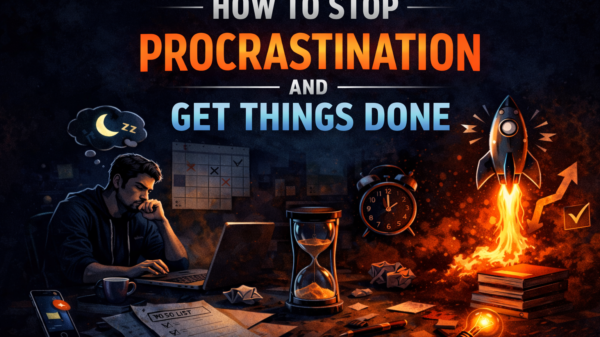









You were going to read this later, but here you are. That’s procrastination in action.
It’s hard for just about anyone not to procrastinate at some stage of life. You have an important task to do, but you don’t do it; instead, you do less important things. Knowing how to stop procrastination and get things done is an important personal and professional development skill.
What Is Procrastination?
Procrastination is doing something later than you should when you know you need to do it.
Common examples include:
- Spending time on social media rather than at the job.
- Discussing social media rather than work.
- While watching video clips, rather than studying, avoid cleaning the house or completing a project.
- Procrastination: doing things at the last minute.
Why Do People Procrastinate?
The answers to this question lie in the area of motivation. The key to eliminating procrastination is knowing what it is and why it happens.
Fear of Failure
People procrastinate tasks due to a fear of not doing them right.
Lack of Motivation
If a task is tedious or hard, it’s easier not to do it.
Feeling Overwhelmed
Big jobs can be daunting. People tend to postpone starting something if they think it’s too large.
Poor Time Management
If you are not organised, you can quickly end up with a long list of tasks. This may result in stress and hurried work.
Perfectionism
The perfectionists tend to procrastinate as they want everything to be perfect. This pressure makes it more difficult to start the work.
Negative Effects of Procrastination
- Increased stress: Procrastination and putting things off until the last minute add stress.
- Lower Productivity: Putting off tasks causes the whole enterprise to lag in productivity and achievement.
- Missed Opportunities: The procrastination will lead to late deadlines, opportunities lost, and substandard performance.
- Reduced Confidence: Leaving tasks incomplete makes individuals feel bad about themselves and uncertain about their capabilities.
How to Stop Procrastination and Get Things Done

Staying focused on important tasks helps overcome procrastination and improve productivity.
Break Tasks Into Smaller Steps
The best approach to them is to break them down into smaller and more manageable steps.
Example:
Rather than writing “Finish project,” further divide it into steps, like:
- Research the topic
- Create an outline
- Write the introduction
- Fill in the main sections
- Edit and finalise
Follow the 5-Minute Rule
The 5-minute rule is one of the easiest ways to get a job started.
How it works:
Say to yourself, “I’m going to do this task for five minutes just so I will get it done.”
After you start to work, it is sometimes easier to keep going.
Establish Clear and Realistic Goals
Stimulating objectives give direction and inspiration.
Example:
Instead of saying, “Work on my blog,” say:
Write 500 words of my blog post today.
Remove Distractions
Common distractions include:
- Social media
- Mobile notifications
- Television
- Unnecessary internet browsing
How to minimise distractions:
- Turn off notifications.
- Put your mobile phone to one side when working.
- If you need to block websites, do it.
- Set up a quiet work area.
Research from Psychology Today also confirms that managing your environment is one of the most effective ways to reduce procrastination.
Use Time Management Techniques
Pomodoro Technique:
Do 25 minutes of work, followed by 5 minutes of rest.
Take a longer break after four sessions.
This technique helps to improve focus and reduce burnout.
Time Blocking:
Use the time management system on your day for specific tasks.
For example:
9:00 – 10:00 Writing
10:00 – 10:30 Emails
11:00 – 12:00 Research
For a deeper look at managing your time and energy, check out these stress management techniques that work alongside productivity habits.
Keep in mind that you’re not aiming at perfection, you’re just trying to get better.
Remember:
Completed is better than perfect.
Tasks are always modifiable and can be enhanced or adjusted as time goes on.
Have a Daily Plan of Things to Do
A To-Do List is an effective productivity tool.
Here are some tips for creating effective to-do lists:
- Write tasks for the next day, the night before.
- Focus on the most critical activities.
- Don’t make it too long a list.
- Mark completed tasks.
Accessibility guides you to the most critical task.
When it comes to getting things done, it’s recommended to do the toughest or most important task first.
This technique is also referred to as “Eat the Frog.”
You can find a helpful framework for this in James Clear’s guide on habit building.
Become More Productive: Create Better Habits
Helpful habits include:
- Making a daily agenda for the day.
- Creating a daily plan for the day in the morning.
- Setting clear priorities.
- Taking regular breaks.
- Maintaining a neat work site.
- Keeping a healthy lifestyle.
Provide Yourself with Positive Reinforcement Following Tasks
Rewards can enhance motivation and make work more pleasurable.
Examples of simple rewards:
- Watching a favourite TV programme
- Taking a short walk
- Enjoying a snack
- Engaging in a pastime
Avoid Poor Dietary Habits and Unhealthy Lifestyles
What you eat and how you live directly impact your ability to focus. Hidden signs of poor nutrition can silently reduce your energy and concentration, making procrastination much harder to fight.
Get Enough Sleep
Insufficient sleep will make concentration and motivation difficult.
Exercise Regularly
Exercise helps to increase energy levels and concentration. Be careful, though: falling for common fitness myths can lead to burnout instead of better health.
Eat Healthy Foods
Eating a nutritious diet helps the brain work.
Manage Stress
Relaxation exercises, deep breathing and meditation may alleviate stress.
Take Advantage of Accountability to Stay Consistent
There’s discipline when there’s accountability.
How to be accountable:
- Write your objectives on a card and give it to a friend.
- Use a study buddy.
- Join productivity communities.
- Track progress regularly.
Breaks the Cycle of Endless Delay
Sometimes, procrastination occurs as a result of negative thinking.
Instead of thinking:
“It’s something I need to do.”
Try thinking:
“Doing this helps me achieve my objectives, that’s why I do it.”
And if you notice yourself turning to food when stress piles up, learning about emotional eating causes can help you understand what’s really going on beneath the surface.
The Benefits of Overcoming Procrastination
Higher Productivity:
You accomplish more tasks in less time.
Reduced Stress:
Tasks that are finished early cause less stress and anxiety.
Better Opportunities:
Predictable productivity results in growth in one’s career and life.
Improved Confidence
When tasks are completed, self-confidence and motivation are increased.
Conclusion
Procrastination is something that most people face, but it can be overcome if you have the right approach.
When you can do so, you can create better productivity habits by breaking tasks down into smaller steps, eliminating distractions, managing your time and avoiding perfection.
It takes consistency and patience to learn how to get things done and to stop procrastination.
Frequently Asked Questions (FAQs)
What is going on when individuals delay tasks when they have significance?
Fear of failure, lack of motivation, feeling overwhelmed, and poor time management often cause people to procrastinate.
How to NOT procrastinate?
The fastest way is to use the 5-minute rule. Do something for only 5 minutes. It will be easier to keep going after you get started.
Is it possible to fall into the habit of procrastination?
Absolutely, if it occurs often, it can become a habit.