
Absolutely. Sharing experiences with others who understand your challenges provides support, reduces isolation, and offers practical coping strategies.
Absolutely. Sharing experiences with others who understand your challenges provides support, reduces isolation, and offers practical coping strategies.
Feeling low or sad is something most people experience at times. Natural ways to cope with low mood Life can be stressful, overwhelming, or simply unpredictable, and these challenges can leave us feeling drained or emotionally down. While occasional low moods are normal, persistent sadness or low energy can affect your daily life. The good news is that there are natural ways to cope with a low mood, and small changes in your lifestyle can make a big difference.
Sometimes speaking to a family member or friend can be very supportive for mental health .

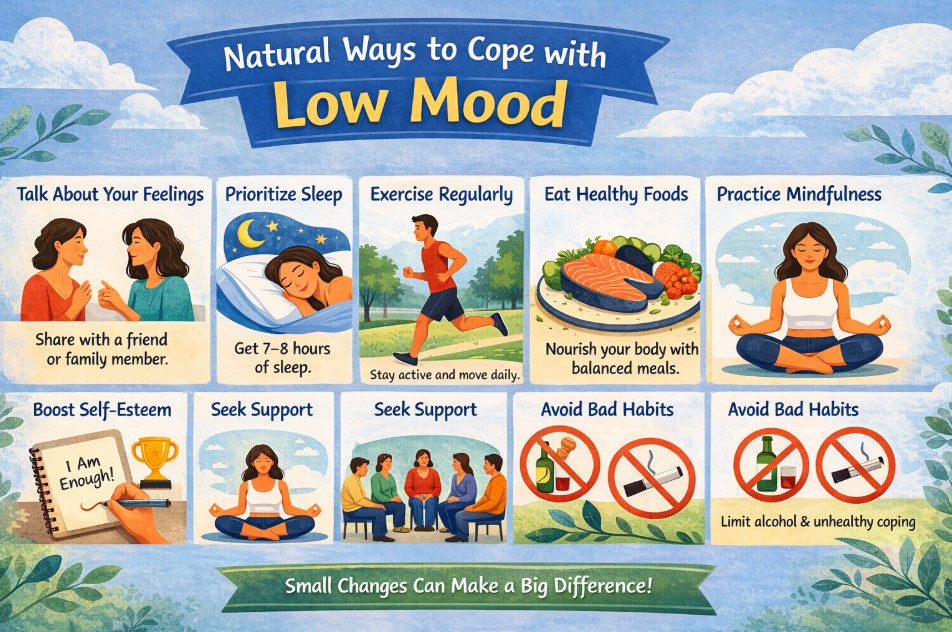
Simple and natural ways to cope with low mood and improve your mental wellbeing every day.
Understanding Low Mood
A low mood is not the same as depression, but it can be distressing. Recognizing the signs and knowing how to respond can prevent it from escalating.
Common Symptoms of a Low Mood
You may notice one or more of the following when your mood is low:
- Feeling sad, anxious, or restless
- Being unusually tired or struggling to sleep
- Feeling irritated, frustrated, or angry
- A decrease in confidence or self-esteem
- Losing interest in activities you usually enjoy
A low mood often improves naturally after a few days or weeks. However, if it persists, it is important to explore supportive measures and coping strategies.
What is a low mood?
A low mood is a temporary feeling of sadness, low energy, or lack of motivation that usually improves within a few days but can sometimes last longer.
When Low Mood Turns into Depression
Sometimes, a low mood lasts longer than a couple of weeks and can develop into depression. Depression is more serious than temporary sadness and can impact your overall wellbeing.
Symptoms of Depression
Warning signs of depression include:
- Losing interest or pleasure in most activities
- Feeling hopeless, worthless, or guilty
- Difficulty concentrating or making decisions
- Changes in sleep or appetite
- Thoughts of self-harm or suicide
If you experience these symptoms, it’s essential to seek professional help immediately. Early intervention can prevent further emotional strain and improve recovery.
Natural Strategies to Improve Your Mood
There are many ways to naturally support your mental wellbeing Natural ways to cope with low mood. These strategies focus on self-care, lifestyle changes, and building emotional resilience.
1. Talk About Your Feelings
Sharing your emotions can lighten the burden and give you perspective. You can:
- Speak with a trusted friend or family member
- Consult a counsellor or mental health professional
Talking doesn’t have to solve everything. Sometimes, simply being heard can help your mind feel lighter and calmer.
2. Prioritize Sleep
Sleep has a direct impact on mood and mental health. Poor sleep can increase irritability, anxiety, and stress. Tips for better sleep include:
- Going to bed and waking up at the same time daily
- Avoiding caffeine and electronics before bed
- Creating a relaxing bedtime routine, such as reading or listening to soft music
Even a small improvement in sleep can have a positive effect on your mood and energy levels.
3. Exercise Regularly
Physical activity releases endorphins, which are natural mood boosters. Exercise can also reduce anxiety and stress while improving self-esteem. Consider:
- Walking or jogging outdoors for 20–30 minutes
- Yoga or stretching exercises to improve relaxation
- Group fitness classes for social interaction and motivation
The key is consistency. Even small amounts of movement daily can enhance your emotional wellbeing.
4. Maintain a Balanced Diet
What you eat affects how you feel. Foods rich in nutrients like omega-3 fatty acids, vitamins, and minerals support brain health. Focus on:
- Fruits and vegetables for essential vitamins
- Whole grains for steady energy
- Protein sources like fish, eggs, or legumes
- Staying hydrated throughout the day
Avoid excessive sugar, caffeine, and processed foods, as they can contribute to energy crashes and mood swings.
5. Practice Mindfulness
Mindfulness helps you focus on the present moment and reduces negative thinking. Simple mindfulness techniques include:
- Meditation for 5–10 minutes daily
- Deep breathing exercises to calm the nervous system
- Paying attention to your senses, like noticing smells, sounds, and textures
These practices help you feel more in control of your emotions and less overwhelmed by stressful thoughts.
6. Boost Self-Esteem
Low self-esteem can worsen a low mood. To improve confidence:
- Celebrate small achievements, no matter how minor
- Write down things you like about yourself or successes from the day
- Avoid comparing yourself to others
Feeling proud of even small accomplishments reinforces positivity and motivation.
7. Seek Peer Support
Sharing experiences with others who understand your situation can be comforting. Peer support groups provide:
- Understanding from people with similar challenges
- Strategies and coping tips that worked for others
- A sense of belonging and reduced isolation
8. Limit Harmful Coping Mechanisms
Some people turn to alcohol, drugs, or gambling to relieve stress. These can temporarily numb feelings but worsen mental health in the long run. Focus on healthier coping mechanisms like journaling, talking to someone, or engaging in hobbies.
Practical Tips for Daily Life
Set achievable goals: Small, realistic targets help you feel accomplished.
Focus on what you can control: Don’t waste energy on things outside your influence.
Connect with others: Social interaction improves mood and provides emotional support.
Engage in hobbies: Doing activities you enjoy increases pleasure and satisfaction.
Even minor, consistent efforts can improve your mood over time.
Final Thoughts
Coping with low mood doesn’t always require medication. By prioritizing sleep, staying active, eating well, practicing mindfulness, and seeking support, you can naturally improve your emotional wellbeing. Remember, experiencing a low mood is normal, and reaching out for help is a sign of strength, not weakness. Small, consistent steps can help you regain control, improve your mood, and enjoy life again.
Frequently Asked Questions (FAQ)
Most low moods last a few days to a couple of weeks. If your mood persists for more than two weeks, consider seeking professional help.
Yes. Regular exercise, adequate sleep, balanced nutrition, and mindfulness can significantly boost emotional wellbeing.
Seek help if your mood affects daily life, lasts more than two weeks, or you experience thoughts of self-harm.
Positive affirmations, tracking achievements, practicing gratitude, and engaging in enjoyable activities can naturally improve confidence.
Absolutely. Sharing experiences with others who understand your challenges provides support, reduces isolation, and offers practical coping strategies.