
Plan Your Meals in Advance for a Healthier and Stress-Free Life
Planning meals ahead of time can make everyday life much easier. When you plan your meals in advance, you reduce daily stress, waste less food, and make healthier eating choices without rushing at the last minute. Instead of wondering what to cook every day, you already have a clear idea of what your meals will look like for the week.
Eating on a regular basis is a lot easier when you plan ahead. Eating out on a daily basis causes daily stress, a lot of food is wasted due to last minute decisions and less healthy food choices are made, all because you didn’t plan your meals ahead. You don’t have to think about what you’re going to eat each day anymore; you have a week’s worth of meals planned out.
Having a meal plan also means that you can control your groceries, save cash, and prevent takeout. With a bit of preparation, you can have your kitchen in order, and always have something to eat.
In this guide we will be examining how meal planning works, how to store cooked food safely, and how freezing and refrigeration can help keep the meals fresh for longer.
Cooking ahead of time saves time and can lessen stress.

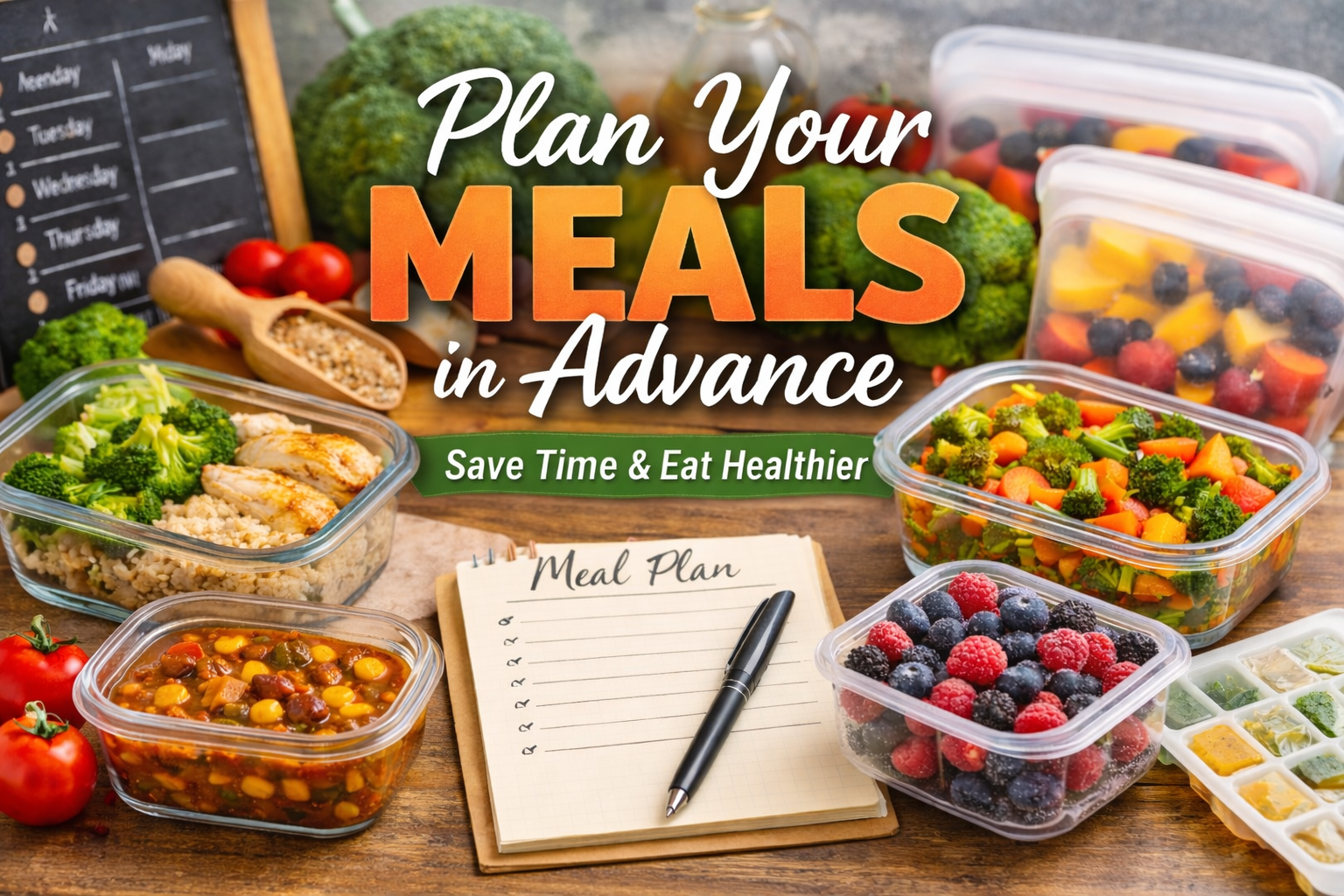
Preparing meals in advance helps save time and reduce stress
Why Planning Your Meals in Advance Is Helpful
A lot of people have trouble picking out what to cook daily. The thing nobody wants at the end of day is to think about Plan Your Meals in Advance. This is where meal planning comes in handy.
Cooking ahead of time gives you a time management and labor saving routine.
Some of the most significant advantages are:
-
Lower levels of cooking stress.
-
Better portion control
-
Reduced food waste
-
Easier grocery shopping
-
Healthier food choices
You can also consider planning out your meals and saving them for the rest of the week by preparing larger portions of meals.
Learn How to Get Started with Meal Planning
Meal planning doesn’t have to be confusing. A basic plan for the week is all that is required.
To begin, select a menu of meals for the week.
1. Select your weekly meals
First of all, determine the meals you wish to have in the coming days. You can schedule breakfast, lunch, and dinner, or just the more time-consuming meal, lunch.
For example:
-
Snack: Fruit and/or vegetable stick and dip.
-
Lunch: Hummus, crackers, veggie sticks or fruit.
-
Snack: Fruit or leftovers
-
Snack: Vegetables, chicken, fish or soups (cooked)
Plan simple meals because they are easier to keep.
Step 2: Make a Grocery List
After selecting meals, make a list of what ingredients you require. It assists you to shop efficiently and also to stay away from purchasing unneeded stuff.
Having a clear grocery list saves time at the market and you won’t have to make impulse buys.
Step 3: Cook in Batches
It’s one of the easiest things to do to help with meal planning: making larger portions. Soups, stews, rice, beans and roasted vegetables are easy to prepare in larger quantities.
These meals can be stored in containers and eaten for a few days.
Smart Food Storage for Meal Planning
Proper food storage is important when meals are prepared in advance. Proper food storage preserves taste, nutrients and safety.
There are two ways of storage:
-
Refrigeration
-
Freezing
There are specific foods that each method is best suited for.
Refrigerating Prepared Meals
When eating cooked food within a few days, it is best to refrigerate it. To keep food safe in the refrigerator, try to keep the temperature 40°F (4°C) or below.
The following is a general checklist of cooked food storage guidelines:
1–2 Days
-
Cooked ground poultry
-
Cooked ground beef
3–4 Days
-
Cooked whole meats
-
Fish and poultry
-
Soups and stews
Up to 5 Days
-
Cooked beans
-
Hummus
1 Week
-
Hard-boiled eggs
-
Tidy and chopped vegetables in airtight containers.
Up to 2 Weeks
-
Opened soft cheese
5–6 Weeks
-
Opened hard cheese
To keep food fresh and prevent odours from permeating the refrigerator, always store it in airtight containers.
Freezable Meals for Long-Term Storage
Freezing is excellent if you need to meal plan ahead of time. Any food kept in the freezer should be stored at 0°F (-18°C) or below.
When properly done, freezing will retain both nutrients and flavour.
2–3 Months
-
Soups and stews
-
Cooked beans
3–6 Months
-
Tenderized meat: cooked or ground meat.
-
Poultry
6–8 Months
-
Berries
-
Transitions between chopping fruits and vegetables, like bananas, apples, pears, plums and mangoes
8–12 Months
-
After blanching in water for 3-5 minutes (depending on vegetable), vegetables
Individual packaging for freezing meals will make it easier to thaw and reheat later.
Most of the recommended foods to freeze are not appropriate for all their applications.
Some foods don’t freeze well but are fine when thawed, whereas others don’t freeze at all.
High water foods typically are soft or mushy after freezing and thawing.
Examples include:
-
Salad greens
-
Tomatoes
-
Watermelon
While these foods may not thaw out the same as they are cooked, they may be used in cooked dishes such as soups and sauces in the cooked state after freezing.
Blanching Vegetables Before Freezing Matters
In blanching, vegetables are cooked for short periods of time, in boiling water, and then rapidly cooled in ice water before being frozen.
This is an easy step to take:
-
Preserve colour
-
Maintain flavour
-
Protect nutrients
-
Prevent texture changes
Vegetables require only 3 to 5 minutes of blanching before they are ready for freezer.
Some Easy Meal Ideas for Batch Cooking
Certain foods are more conducive to the meal planning process, such as those that store well and reheat well.
Here are some quick tips:
Soups and Stews
These meals freeze great and can be heated up easily. Chicken soup, vegetable soup and lentil stew are healthy choices.
Beans and legumes that have been cooked
You can prepare a big batch of beans and freeze them for later as part of salads, wraps, and rice recipes.
Cooked Grains
Rice, quinoa and whole grains can be stored in the fridge or freezer.
Roasted Vegetables
Roasted vegetables can be served as snacks or a side salad with other veggies, as part of grain bowls, or even as a side dish.
Cooking these foods ahead of time can help to have healthy ingredients on hand at all times.
Here Are Some Helpful Tips to Make Meal Planning Less Difficult
With some helpful tips in mind, meal planning is much easier.
Keep a Menu Simple
There is no need to have to do fancy dishes every day. Simple meals take less time to prepare, and are easier to store.
Use Airtight Containers
Good containers are used for keeping foods fresher and preventing food contamination.
Label Frozen Meals
Freezer containers can be labelled with the date that the product is placed in the freezer to remind you of how long the product has been stored.
Rotate Your Meals
Vary the recipes on a weekly basis to make things interesting and fun.
Design a Well-Balanced Week’s Menu
A healthy eating plan typically contains a variety of food groups.
For example:
-
Vegetables and fruits
-
Whole grains
-
Protein sources like beans, eggs, poultry or fish
-
Healthy fats
Mix and match these foods when meal planning to provide a balanced and satisfying diet.
Final Thoughts
One of the easiest habits for a healthier lifestyle is to start planning your meals ahead. It can save time when you have a busy day, prevents food waste and helps maintain a consistent eating schedule.
It’s possible to make meal planning simple and helpful if you organize a bit, and learn to store food correctly. Planning meals ahead of time is much easier and more convenient for healthy eating, whether it is for a few days or a whole week.
Frequently Asked Questions (FAQs)
What should I do to plan meals in advance?
It is best to plan meals for about a week for most people. This helps to keep organisation of groceries and helps in not letting food stay longer in the refrigerator.
2. May ALL cooked foods be frozen?
Not all foods freeze well. Soups, stews, beans and cooked meat freeze better, and foods with a high water content can lose firmness.
3. Which containers are the most suitable for storing prepared meals?
Airtight containers made of glass or BPA-free plastic are frequently used as they help in food preservation and minimize spilling.
4. What are some ways to avoid wasting food when you are planning meals?
Careful planning, ensure leftovers and food is stored properly can help minimize waste.
5. Do you find meal planning useful for healthy eating?
Yes. If meals are pre-planned, it is easier to make healthier food choices rather than settling for quick or processed meals.