
The right meal at the right time can boost your performance by up to 20% and cut your recovery time in half.
Pre-workout meals and post-workout meals are important to how well your body performs before and after exercise, respectively. What you eat before and after training fuels your body for energy, endurance, muscle recovery, and performance. Before diving into meal timing, it’s worth knowing the hidden signs of poor nutrition because many people train hard but unknowingly eat in ways that work against their goals.
If you’re a novice exerciser or have been working out regularly, you may be able to maximise your results from your fitness sessions by learning the distinction between pre-workout and post-workout food intake. Balance of carbs, protein, hydration, and timing can make all the difference in the world for performance and recovery.
This guide covers foods to eat before and after workouts, the importance of meal timing, and basic nutrition tips for various types of exercise.
The Science Behind Workout Nutrition Timing
Exercise alters the use of body energy. As you exercise, your muscles use carbohydrates and other nutrients that are stored in your body to make energy. Following exercise, your body starts to repair muscles and replenish energy reserves.
This is why it is not advisable to have the same pre-workout and post-workout meal. The meals are used for different purposes.
Pre-workout meals are geared toward:
- Providing energy
- Preventing fatigue
- Supporting endurance
The emphasis in post-workout meals is on:
- Muscle repair
- Rebuilding energy stores
- Rehydrating the body
With proper meal planning, you might just find that you’ve got more energy for your exercise program and quicker recovery.
The Important Nutrients That Your Body Needs When Exercising
It’s helpful to know the nutrients that your body needs during exercise before you discuss specific foods.
Carbohydrates
During exercise, the body’s primary fuel source is carbohydrates. Carbs are converted to glucose for fueling muscle movement and endurance.
Carbohydrates should be consumed before activity to sustain energy levels and avoid fatigue.
Protein
During exercise, the muscles experience microtrauma or small tears. Protein is essential to repair these fibres and stimulate muscle growth. After exercise, it is particularly important to include protein in your diet to aid recovery.
Hydration
Water is used by almost all parts of the body. When exercising, you sweat fluids out of your body. According to Mayo Clinic, drinking enough water before, during, and after exercise is essential to keep muscles functioning properly and prevent early fatigue. Dehydration can cause fatigue, headaches and poor performance if these fluids are not replaced.
Consuming adequate amounts of water before, during and after exercise is important so that the muscles are able to function properly.
Timing
When you eat could also affect your exercise response. Too near a workout can cause discomfort, and too far ahead of the exercise can result in low energy levels.
It can help you feel comfortable and energised to train.
When to Have Food Before Exercise
Your meal before you work out should be energising, but not too heavy or uncomfortable. A perfect meal typically includes easy-to-digest carbohydrates and some protein.
The kind of training you’re going to undertake can also affect your choice of food before training.
Pre-Workout Meals for Cardio Workouts
Running, cycling or high-intensity interval training will burn energy in a steady stream. For those endurance activities, carbohydrates are particularly important.
Avoid foods that contain a lot of fat or fibre before exercise. These foods can be difficult to digest and can lead to bloating.
1–3 Hours Before Cardio
Consume a well-balanced eating plan with some protein and carbohydrates.
Examples include:
- Oatmeal with banana
- Peanut Butter & Whole-Grain Toast
- Yoghurt with fruit and granola
- Grilled chicken on rice. Grilled chicken over rice.
30–60 Minutes Before Cardio
A snack before exercising, if it makes you feel slightly hungry, is a great way to provide another energy boost.
Good options include:
- A banana
- An energy bar
- A small-sized fruit smoothie
- A small handful of dried grapes.
They’re easy to eat, quickly digested and good for energy.
The Best Pre-Workout Meals for Strength Training
Muscles are stressed during strength training exercises such as weight lifting. Both carbohydrates and protein are important for strength and endurance. If you want to go deeper into this topic, our complete guide to building muscles naturally breaks down the full approach to strength and muscle growth.
1–3 Hours Before Strength Training
Eat a well-balanced diet, including protein and complex carbohydrates.
Examples include:
- Greek yoghurt topped with berries.
- Whole-grain toast topped with eggs
- Chicken with brown rice
- Cottage cheese and fruit.
These foods give sustained energy and help to condition muscles for physical strain.
30 Minutes Before Strength Training
A snack will be offered, but is not required. When hungry, opt for low-energy foods.
Good choices include:
- Carrots with hummus
- Cheese, whole-grain crackers.
- A peanut butter apple with a small apple.
A Balanced Pre-Workout Meal for Yoga or Light Activity
A well-rounded pre-workout meal for light activity or yoga.
Yoga, Pilates and stretching are typically done on lighter meals. Flexibility–exercising can be uncomfortable or full after heavy foods.
The Perfect Time for a Light Bite to Enjoy
An ideal time to enjoy a light bite.
Have a small portion of a carbohydrate snack.
Examples include:
- A fruit smoothie
- Spread almond butter on toast. Spread almond butter on toast.
- Yoghurt with honey
- A small bowl of fruit
Try to steer clear of fried foods, large meals or foods that tend to bloat.
The Best Post-Workout Diet to Speed Up Recovery

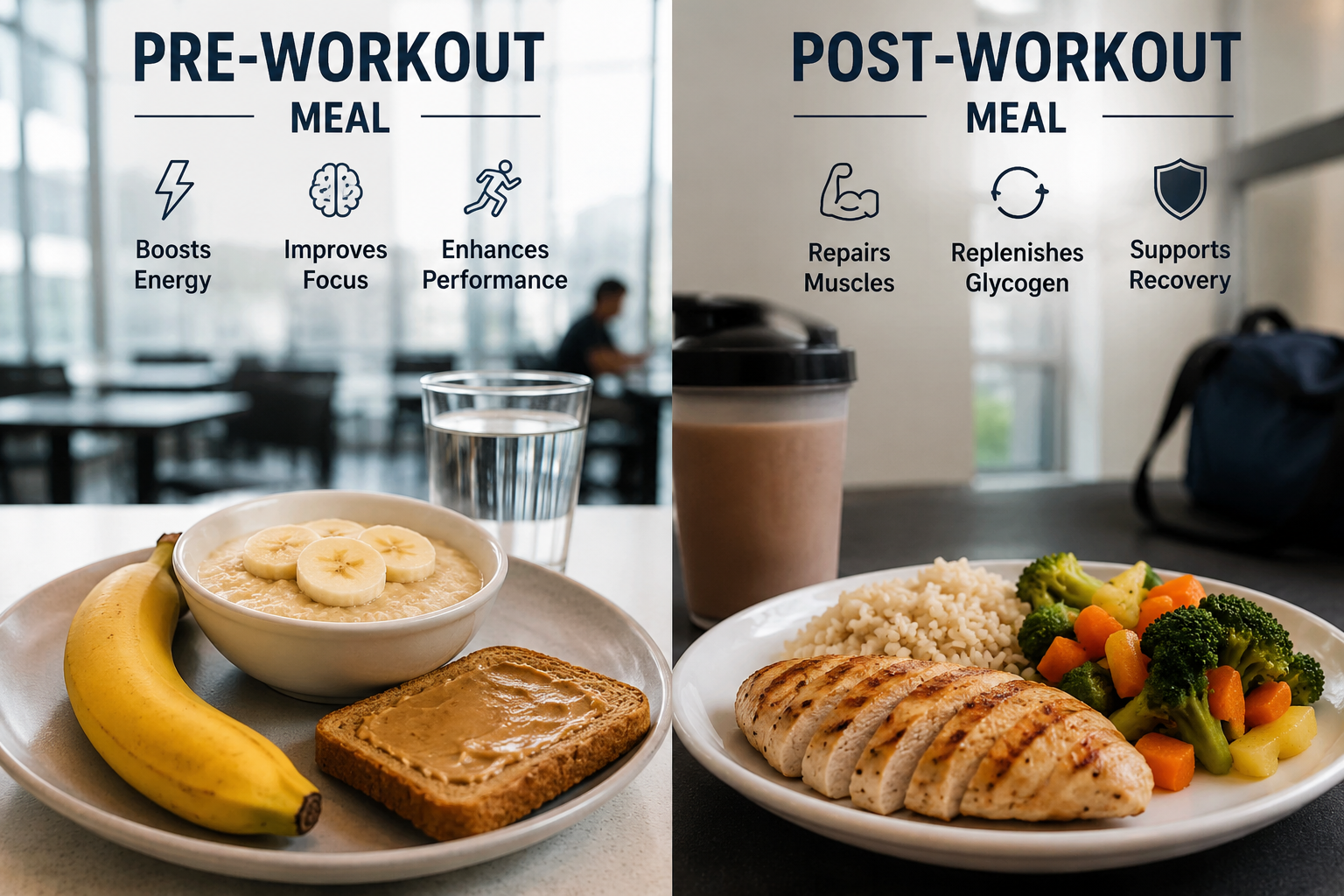
Smart meal choices before and after exercise help maximise fitness gains.
Following exercise, your body switches to recovery mode. Muscle starts healing, and energy reserves must be replenished. That’s where post-exercise meals are essential
There is a little talk of an “anabolic window” that implies eating in the 30-60 minutes after workouts. But there are many who can benefit from eating in the next few hours after training.
The most essential aspect is listening to your body and refuelling when you feel it.
Post-Workout Foods Following a Workout
A recovery meal should be used after a cardiovascular exercise, as much energy is used in these exercises that the body needs to be replenished with carbohydrate and repaired with protein.
Some examples of good foods after a cardio session are:
- Chocolate milk
- Orange Fruit Smoothie made with protein powder
- Whole-grain pita bread and hummus.
- Fruit and Granola Yogurt.
These meals are beneficial in replenishing lost energy and muscle repair.
Post-Workout Meals for Muscle Recovery
Following a strength training session, the body requires protein for muscle repair and replenishment and carbohydrates to replenish energy stores.
Recovering meals that should include:
- Grilled chicken and sweet potatoes
- A protein drink containing a banana
- Tuna sandwich (whole-grain bread)
- Avocado-stuffed eggs with toast.
These meals will help enhance muscle repair and recovery.
Recovery Foods After Light Workouts
If you are working up a sweat (or not) in yoga or stretching, your focus should be on keeping hydrated and gently recovering. Good options include: Coconut water, fresh fruit, yoghurt, nuts, or seeds. These foods are light and contain enough hydration and nutrition.
Hydration Tips to Keep in Mind
When it comes to working out, these are some hydration tips to keep in mind: When it comes to workout performance, hydration is just as important as food. To attain the proper hydration, consume water all day long.
- Drink water before exercise!
- Drink water while exercising, if necessary.
- Rehydrate after finishing your workout.
Electrolyte drinks can be useful for very strenuous or prolonged exercise to replenish the minerals lost in sweat. Most people, however, merely need water.
Common Workout Nutrition Mistakes
There are some common workout nutrition mistakes out there. Active people still get nutrition errors in their system. These errors can be avoided to boost performance and recovery.
Skipping Pre-Workout Meals
Working out on an empty stomach may leave you feeling tired or weak. Your body requires fuel for optimal performance.
Avoid Eating Excessive Amounts of Food Just Before Physical Activity
Eating big meals just before exercise can lead to stomach discomfort, nausea or sluggishness.
Ignoring Hydration
Dehydration may cause headaches, dizziness and decreased stamina.
Taking Excessive Amounts of Supplements
There are numerous supplements out there that offer fast results, but not all supplements are required. Whole foods typically offer your body the nutrients you are looking for.
Simple Nutrition Tips to Boost Your Workout Performance
Some steps can help to enhance your eating habits.
- Plan meals for your workouts.
- Make balanced meals using carbs and proteins.
- Use water throughout the day.
- Be mindful of the way your body responds to foods.
- Don’t try something new just before exercise.
Always use your personal judgement, as everyone’s body is unique and will have its own balance to meet.
When to Seek Professional Advice
There are times when you will need to seek professional advice: A registered dietitian or health care provider may be helpful if you have a particular fitness goal, such as muscle building or weight loss. They can help you develop a customised nutrition plan for you, depending on your:
- Body weight
- Exercise routine
- Health conditions
- Fitness goals
A professional can help ensure that you are getting the nutrition you need and that you are staying healthy in the long term.
Final Thoughts
The difference between a pre-workout meal and a post-workout meal can make a world of difference for your workout. The right foods will give your body fuel before exercise and aid recovery afterwards. With a balance of meals, the right timing and hydration, you can optimise exercise performance, aid muscle recovery, and promote overall health. If you’re looking to pair this nutrition approach with the right exercise plan, this healthy workout routine to lose weight naturally is a great place to start.
With a balance of meals, the right timing and hydration, you can optimise exercise performance, aid muscle recovery, and promote overall health.
With a few tweaks and changes to your diet, you can get better results from your workouts, recover faster, and experience more long-term progress.
Frequently Asked Questions (FAQs)
What’s the distinction between pre-workout and post-workout meals?
Pre-workout meals are designed to give the body energy for physical exertion, and post-workout meals target muscle recovery and replenishment of energy stores.
What should you eat before you exercise?
Ideally, eat a balanced meal about 1–3 hours before exercising. If needed, you can have a small snack 30–60 minutes before your workout.
What foods do I need to eat following the exercise?
Best combination of protein and carbohydrate. Some options are: protein shake with fruit, chicken with rice, or yoghurt with granola.
Is it okay to work out on an empty stomach?
Others like fasted workouts, while many have a diminished amount of energy. Consuming a small snack before can enhance performance.
What is the reason why it is important to stay hydrated during exercise?
It is really crucial to drink plenty of water. Adequate water intake during, before and after exercise helps to keep the body energised and function properly.