





















Every scroll, like, and comment, is it connecting our children to the world, or quietly disconnecting them from themselves?
Social media is now an accepted part of our lives, particularly for young people. Whether it’s watching brief videos or connecting with friends. Our kids are spending a lot of time online. The impact of social media on kids’ and teens’ mental health is becoming a big problem, as highlighted by recent research. These sites provide social connection, creativity, and education opportunities. But they also come with risks to psychological health. Parents, teachers, and even young people themselves need to be aware of the effects of social media on kids and teenagers.
In this article, we look at the benefits and drawbacks and how to strike a balance.
Increasing Social Media Use in Youth
In the last ten years, social media has seen a dramatic rise in use among children. Children often begin using screens early in life, and by adolescence, social media is a significant part of their lives.
This trend has also raised concerns about children and screen time effects because excessive screen time can also affect a child’s emotional well-being.
Social media is now more than a platform; it impacts the way they think, communicate, and see themselves. The impact of social media on kids’ and teens’ mental health is getting worse day by day.
Positive Effects of Social Media
Let’s not dwell on the problems without acknowledging that social media isn’t all bad. Used correctly, it has many positive effects:
1. Social Connection
It enables teens to connect with friends and family, particularly in times when social contact is restricted. It can help alleviate loneliness if not overused.
2. Self-Expression
Teens can express their ideas, interests, and skills through social media. This can build self-esteem and allow them to express themselves.
3. Learning Opportunities
Through educational videos and campaigns, online media can help with learning and exposing children to different cultures.
4. Support Communities
Online communities can offer some teens support and acceptance.
Negative Effects on Mental Health
However, the negatives are greater than the positives. The link between mental health and digital media has received a lot of attention, not least with the increase in mental health problems among teens.
1. Anxiety and Depression
Anxiety is one of the common mental health problems among adolescents. The exposure to “perfect” lives leads to comparison and feelings of deficiency and exclusion.
2. Low Self-Esteem
Followers, likes, and comments can become a barometer of popularity. Lack of expected likes and comments can impact teens’ self-esteem.
3. Sleep Problems
Night-time browsing leads to sleep deprivation. Lack of sleep leads to mood shifts, anxiety, and inattention; learning stress management techniques can help.
4. Cyberbullying
Cyberbullying is a serious issue. Mean, hurtful comments, gossip, or being left out can have a profound effect on a child’s self-esteem.
5. Teen Social Media Addiction
The use of social media is difficult to control. These sites are designed to keep you scrolling, which can result in social media addiction for teens and harm schoolwork, exercise, and in-person relationships.
The Role of Screen Time
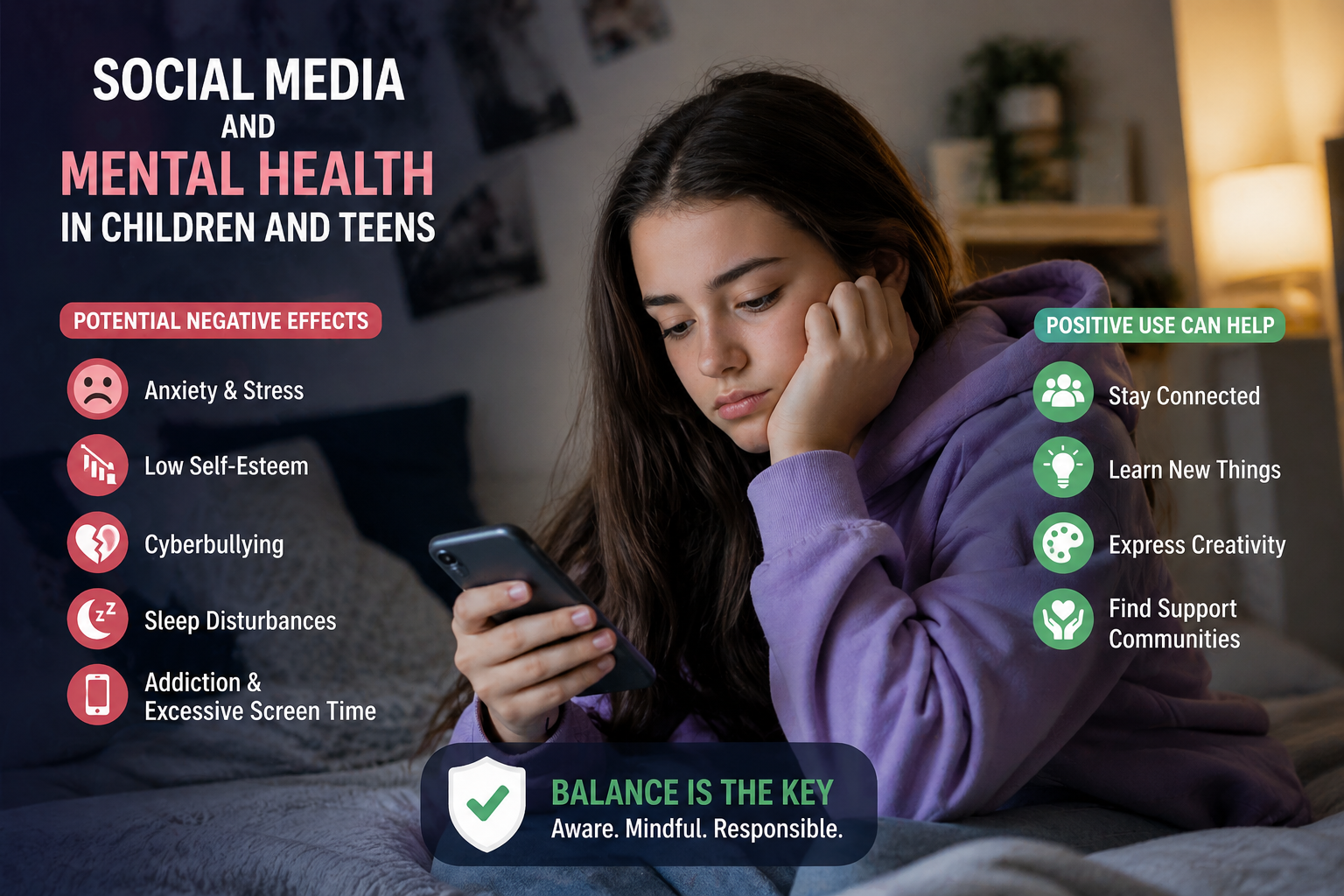
Social media can affect children’s and teens’ mental health by causing stress, anxiety, low self-esteem, and sleep problems.
High screen time is a key factor in mental health. Children and screen time effects are not only linked to the amount of time spent but also to the nature of screen time.
Passive screen time, such as “constant scrolling,” is more harmful than active screen time, such as learning or making things.
Excessive screen time can cause:
- Reduced physical activity
- Shorter attention spans
- Increased irritability
- Digital approval seeking
According to AAP guidelines, experts recommend limiting recreational screen time to 1–2 hours per day.
Online Behavior of Children
Young children’s online behavior is another consideration. Children may not be emotionally ready for online interactions.
They may:
- Reveal details about themselves without considering the consequences
- Become involved in arguments or inappropriate discussions
- Be swayed by trends without thinking critically
This calls for parental guidance and supervision, particularly for young children.
Emotional Well-Being and Social Media
There is a complex relationship between social media and teen mental health. It’s a complicated relationship that depends on how, why, and how much it is used. Appropriate use may foster friendships and creativity.
But unhealthy use can result in:
- Constant comparison
- Fear of missing out (FOMO)
- Pressure to appear perfect
- Online approval seeking
Adolescents are in a period of emotional development, making these demands intense.
Signs to Watch Out For
Parents and carers need to be aware of the signs of social media’s negative impact:
- Sudden mood swings
- Isolating from family or other offline activities
- Declining academic performance
- Sleep disturbances
- Being easily frustrated or sad
These could be indicators of underlying psychological problems in adolescents tied to technology.
How to Create a Healthy Balance
It’s not necessary to cut social media out of life. It just needs to be used in moderation.
1. Set Screen Time Limits
Create limits on how much time is spent. Promote regular breaks and activities.
2. Encourage Open Communication
Have frequent conversations about online activities. Make them feel safe to talk about issues.
3. Promote Digital Awareness
Show them to be skeptical of online content. Not everything is real.
4. Create Tech-Free Zones
Put phones down during dinner and before bedtime to reduce distractions and enhance family connection and sleep.
5. Lead by Example
Kids can be imitators. So keep up with your own healthy habits.
6. Prioritise Offline Activities
Support physical activities, interests, reading, and in-person socializing.
The Role of Parents and Educators
Parents and educators are vitally important in teaching children to use social media. Rather than censorship, awareness is key.
Educating children about the positive and negative aspects of social media will equip them to make more informed decisions.
Online literacy should be an important life skill, like communication or problem-solving.
Final Thoughts
Social media and mental health are not straightforward issues. It involves use and misuse, awareness and impact. The impact of social media on children and teenagers depends on usage, context, and support.
Frequently Asked Questions
Social media can impact children in both positive and negative ways. It helps them stay connected and learn new things. Excessive use can lead to anxiety, low self-esteem, and emotional stress.
Common issues include anxiety, depression, sleep problems, and low confidence. Constant comparison and online pressure often make these problems worse.
Experts generally recommend limiting recreational screen time to 1–2 hours per day. Balance is key, along with regular breaks and offline activities.
Yes, too much time on social media can reduce focus, disturb sleep, and decrease productivity, which can negatively affect school performance.
Warning signs include constant phone use, mood swings, poor sleep, reduced interest in real-life activities, and irritability when not online.