














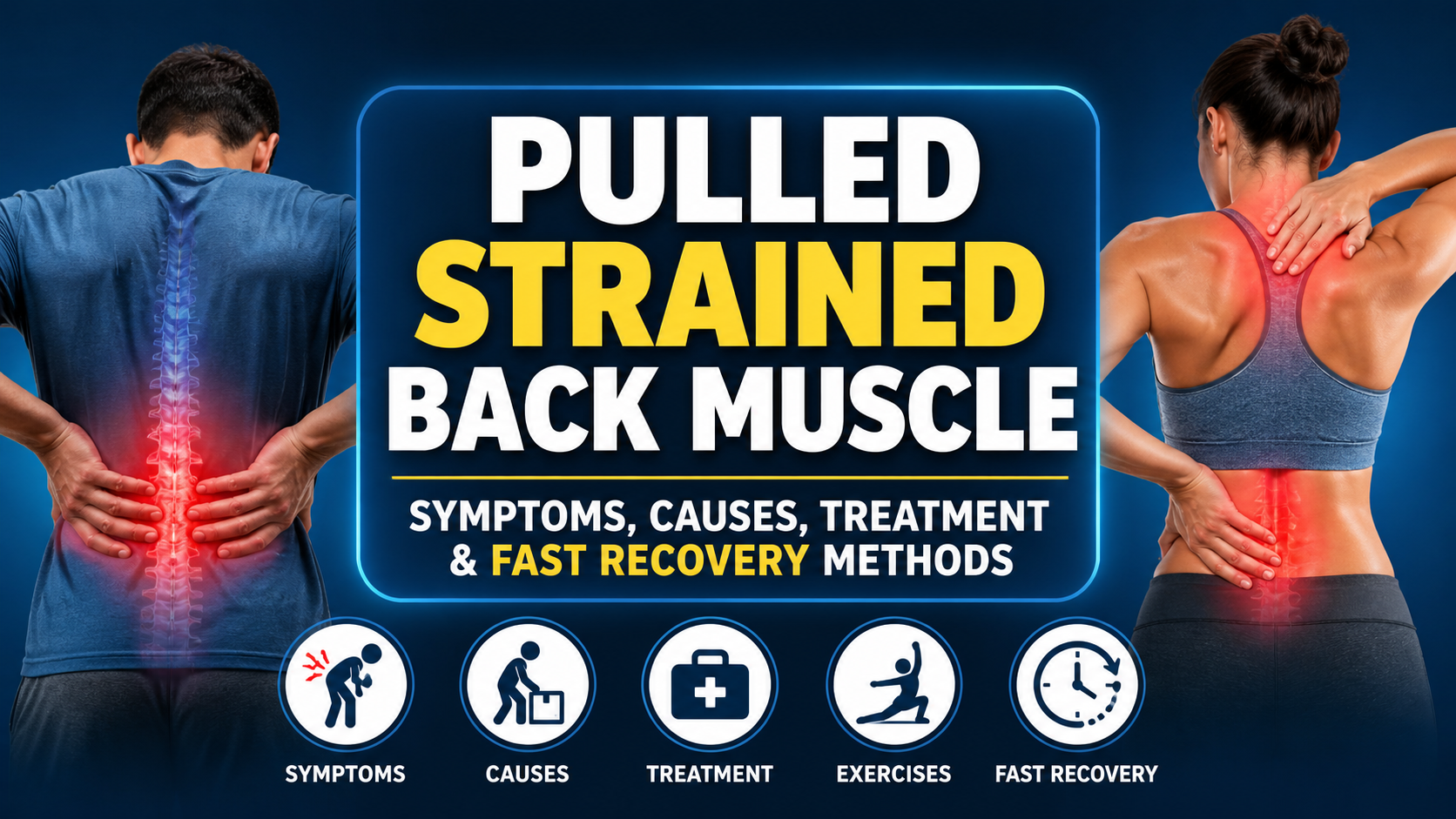
One awkward bend, one heavy lift, and your entire day stops. A pulled back muscle can happen in a second. How fast you recover depends entirely on what you do next.
You stoop to retrieve an object, stretch yourself in a wrong position, or overexert yourself in a workout, and then your back aches with sharp pain. I have gone through this myself when lifting a heavy storage box in the wrong manner. Initially, I believed that full bed rest would heal it, but mild exercise and appropriate therapy helped much more.
Here, you will know the symptoms, causes, most effective treatment, and quickest healing in this guide.
What is a Pulled, Strained Back Muscle?
A pulled, strained back muscle occurs due to the overstraining or the development of small tears in the muscles or tendons in your back. According to the Mayo Clinic, back injuries are among the most common reasons people visit a doctor. This may occur in the:
- Lower back
- Upper back
- Mid back
- Side back muscles
The most prevalent one is a lower back strain of the muscle, as the lower back carries the weight of the body, lifting, bending, and twisting in everyday life.
How to Recognize a Back Muscle Strain
Symptoms of a Common Back Muscle Strain
The symptoms may be mild or severe pains.
- Acute back pain.
- Pain in lower extremities, sharp, post-lifting.
- Back muscle spasm.
- Pain and stiffness in the back.
- Pain during twisting backwards.
- Back pain that causes difficulty in bending.
- Post-activity treatment of sore back muscles.
- Sensitivity of the locality.
Symptoms of a Severe Back Muscle Strain
- Trouble standing upright
- Painful walking.
- Inflation or pain in the back muscles.
- Limited movement
- Severe tightness
When it radiates to the legs or makes the legs numb, it might not be just a strain.
What Can Cause It?
A back strain is a frequent occurrence of a muscle that is strained due to sudden strain or overuse.
1. Heavy Lifting
One of the leading causes of post-lifting back pain is poor lifting form.
2. Twisting Suddenly
Rapidly lifting weights, such as when moving items, can overstretch muscles.
3. Muscle Injury of the Back: Overuse.
Over-exercise, monotonous labor, or hard physical labor may cause stress on tissues.
4. Poor Posture
Poor sitting habits commonly cause posture and back pain in the long run.
5. Weak Core Muscles
Poor abdominal and back muscles make us more vulnerable to injury.
Way to Treat Properly
Simple home care is normally the best form of treatment for a strained back muscle.
First 48 Hours
Cold Therapy
Apply an ice pack for 15-20 minutes every few hours. This will aid in the reduction of swelling and pain.
Light Rest
Rest is beneficial, though full bed rest may aggravate stiffness.
Gentle Walking
Regular short walks can help increase circulation and decrease tightness.
After 48 Hours
Heat Therapy
The question of whether to use hot or cold therapy on the back strain is a question many people would ask. First ice and then heat to relax the muscles.
Pain Relief
Unless it is unsafe for you, over-the-counter anti-inflammatory medicine can be used.
Gentle Movement
Back pain can be relieved by stretching, which starts when sharp pains are reduced.
How to Quickly Treat a Pulled Strained Back Muscle
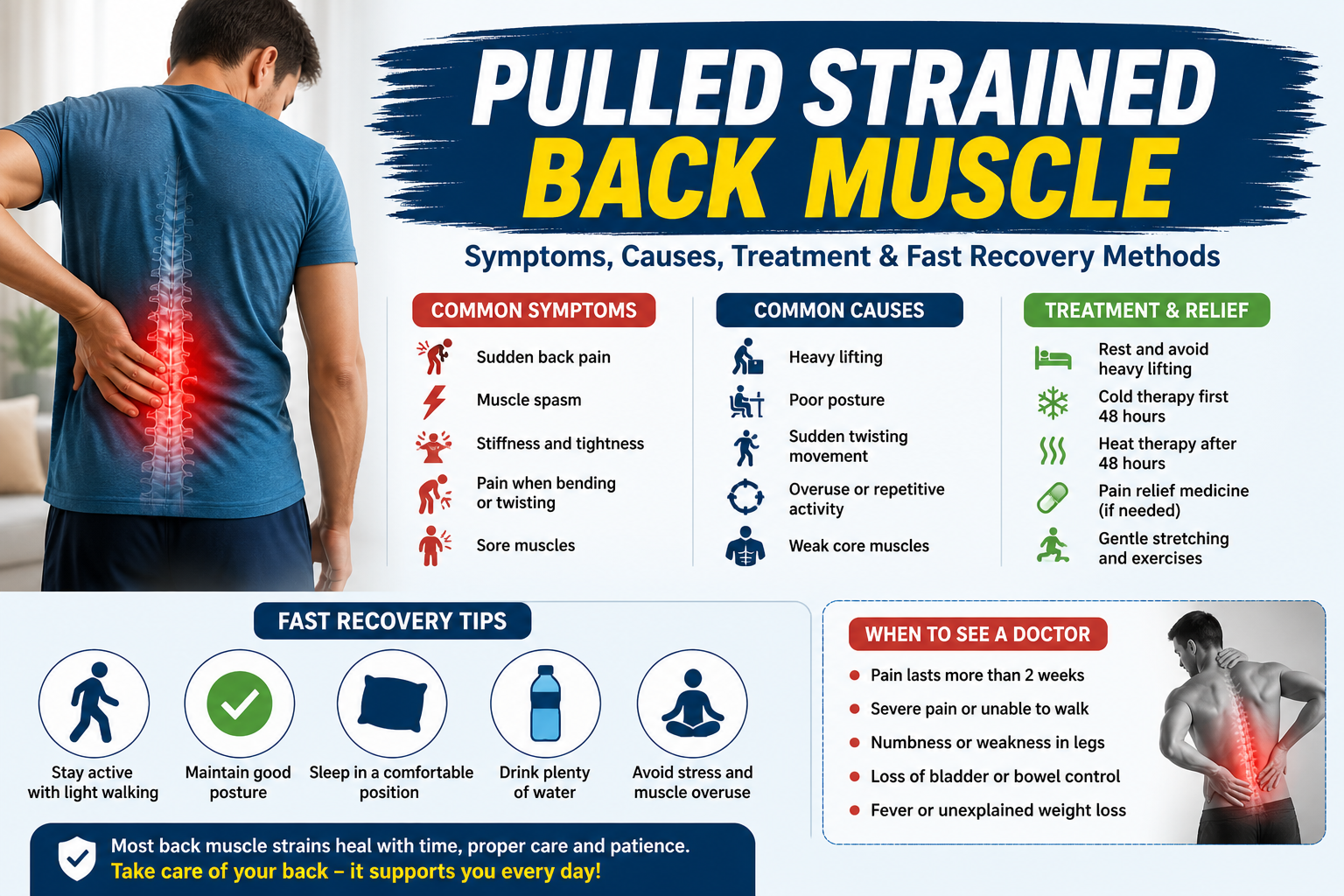
Common symptoms, causes, and recovery methods for a pulled, strained back muscle.
To get the quickest remedy for back muscle strain, a combination of the following strategies will do the job. Experts at the Cleveland Clinic also recommend a gradual return to movement over strict bed rest:
- Ice in the first two days
- Swollen heat is improved.
- Gentle daily walking
- Correct posture
- Do not lift heavy objects.
- Sleep in a comfortable position.
- Begin light exercises progressively.
This usually is more effective than lying in bed.
How Much Time Is Required to Heal?
The most asked question is: What is the duration needed to heal a pulled, strained back muscle?
Mild Strain
1 to 2 weeks
Moderate Strain
3 to 6 weeks
Severe Strain
6-8 weeks or longer.
Sleeping With a Pulled Back Muscle
Sleep is a bigger issue than most of us know.
Best Sleeping Positions
- Lying on your back with a pillow under your knees.
- On your side with a pillow between your knees.
These postures decrease stress and enhance comfort.
It is advisable not to sleep on your stomach.
Exercises That Help
Once the sharp pain starts to ease, gentle movement becomes your best friend. If you are new to exercise or returning after a long break, following a structured home workout plan can help you rebuild strength safely without risking further injury.
Knee-to-Chest Stretch
Bend one knee up to the chest, delicately.
Cat-Cow Stretch
Bend back and forth over the spine.
Pelvic Tilt
Enhances support muscles.
Walking
One of the safest recovery exercises.
Discontinue in the case of increased pain.
Pulled Strained Back Muscle vs Slipped Disc
These conditions are usually mixed up.
Pulled Muscle
- Local muscle pain
- Tightness
- Pain with movement
- Improves with rest
Slipped Disc
- Pain down leg
- Tingling
- Numbness
- Weakness
See a doctor in case nerve symptoms occur.
Home Remedies for a Pulled, Strained Back Muscle
Strained back muscle remedies that can be useful include:
- Ice packs
- Warm compress later
- Epsom salt bath
- Gentle stretching
- Massage (light only)
- Hydration
- Anti-inflammatory foods
They are useful natural remedies in mild instances of back strain.
When to Visit a Doctor
See a doctor if:
- Lasts longer than 2 weeks.
- You are not able to stand or walk up.
- The pain is increasing day-by-day.
- Weakness or numbness occurs.
- Fever appears
- Pain in the chronic back muscles keeps recurring.
Personal Recovery Tip
The greatest error that I made when I strained my lower back was to lie down excessively. The pain improved, although the stiffness worsened. Recovery was much quicker as soon as I started short walks and gentle stretching. Once fully recovered, I also started a healthy workout routine, which helped me strengthen my back and core, reducing the chances of re-injury.
Movement is medicine at times.
Final Thoughts
Strained back muscle tugs can be painful and frustrating, and in most cases, the right care will help them. Early ice, slow movement, late heat, better position, and no re-injury.
If symptoms seem serious, seek medical help. Treating early makes the recovery fast and prevents future problems.
Frequently Asked Questions (FAQs)
Light walking is usually fine. Avoid heavy lifting or intense workouts until pain improves.
Ice early, walk gently, use heat later, sleep properly, and avoid strain.
Yes, most mild to moderate strains heal with home care.
Severe pain, bruising, weakness, or major movement problems may suggest a tear.
Yes, gentle walking often reduces stiffness and supports healing.