










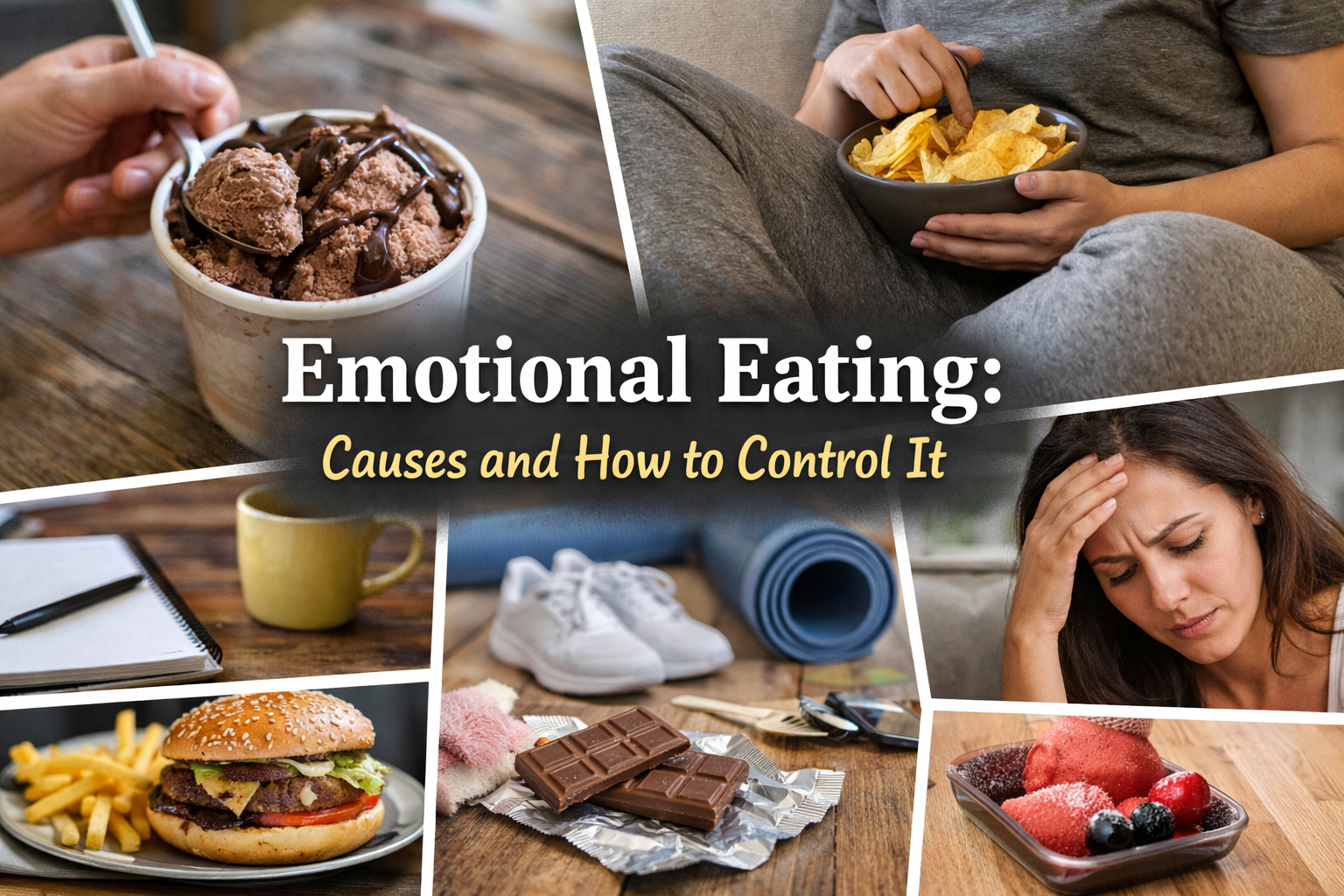
Emotional eating isn’t a character flaw. But left unaddressed, it quietly takes a toll on both your health and happiness.
Have an issue with emotional eating? You’re not alone. This is because many people are seeking food for emotional rather than physical reasons. Sometimes food can be the easy way to deal with stress, sadness, boredom, or even happiness. Emotional eating can be satisfying for the moment, but it can lead to feelings of guilt, frustration, and unhealthy habits in the long term. The good news is that with greater awareness of the root causes, you can learn to address them more effectively.
In this article, you will learn to identify the triggers, the causes, and to develop some simple strategies to overcome the cycle. Understand why people eat emotionally and how they can manage their stress eating behaviors.
What Is Emotional Eating?
Emotional eating is the way of eating to address emotions, rather than physical hunger. You have eaten when you didn’t need any energy, but to make your feelings better. It might look like:
- When feeling stressed or overwhelmed, eating will become a habit.
- Eating comfort food when you are feeling emotional.
- Snacking due to boredom.
- Uncontrolled eating and/or drinking behaviors.
Emotional hunger is sudden, urgent, and physical hunger is gradual and can be satisfied by a wide range of foods. Interestingly, many people also notice they feel sluggish or low-energy after a large meal — if that sounds familiar, tired after eating explains why this happens and what you can do about it.
Why We Turn to Food for Comfort?
Comfort is related to food from an early age. Different forms of celebration, reward, and even coping can mean eating. Gradually, the brain begins to link eating with a sense of relief or feeling better. Some foods, particularly those with a high sugar or fat content, can temporarily help to improve your mood. This forms a cycle in which the more you think about using food as an instant cure-all, the more it becomes a habit.
This comfort is, however, short-lived. As time passes, the initial feeling usually returns, and perhaps even stronger, accompanied by guilt or remorse.
Causes of Emotional Eating
The first step to emotional eating is to identify the causes. Here are some of the typical ones:
1. Stress and Anxiety
One of the primary causes is stress. Feeling overwhelmed, the body looks for speedy relief, and sometimes it is in the form of food.
2. Boredom
Eating will not always be a response to hunger; it may just be something to do while passing the time. It’s easy to start getting into a habit of mindless eating when you’re bored.
3. Sadness or Loneliness
When you are feeling emotional, food can be comforting. It can be a temporary escape or distraction from negative feelings. Research shows that negative thinking can significantly worsen these emotional patterns, making it harder to break the cycle.
4. Habit and Routine
Being in the habit of eating while watching TV, working, or, to a lesser extent, scrolling your phone can become a habit even if you are not hungry.
5. Reward System
After a long or difficult day, many people will seek comfort in food. This habit might seem like a good idea, but it can reinforce emotional eating behaviors.
Signs You Might Be an Emotional Eater

Learn the causes of emotional eating and simple ways to control stress eating habits
Here are some indicators that you may be an emotional eater. Awareness of signs will help you identify your own behaviour:
- You eat even when you’re full.
- You have a craving for certain favorite foods.
- You feel remorseful after eating.
- You eat without taking time to think about it.
- You are eating because of feelings, NOT because you are hungry.
Awareness is powerful. However, when these trends become apparent, it becomes possible to make conscious decisions.
How to Identify Your Triggers
Follow a Food and Mood Journal
Start writing down: What you ate, when you ate, how you felt before and after. Over time, certain patterns will begin to emerge. You may observe that stress, boredom, or specific situations activate your eating habits.
Have a Conversation With Yourself
Asking and answering simple questions. Before eating, stop and ask:
- Am I really hungry?
- How am I feeling right now?
- Is food going to make this feeling go away?
This brief interval could be a big deal.
The 10 Practical Ways to Control Emotional Eating
1. Stop and Think Before You Eat
Think before eating. Take a break for a few minutes before eating. This will give you time to determine if you are truly hungry or reacting emotionally.
2. Find Healthy Distractions
Every once in a while, a bit of a break is needed to get a new perspective. Try:
- Taking a short walk
- Listening to music
- Calling a friend
- Going outdoors for air
Just 5 minutes can refresh your mind.
3. Manage Your Stress
As stress is a big factor, it is important to relax. You can try:
- Deep breathing exercises
- Light physical activity
- Meditation/Quiet time
- Stretching, or yoga
The more relaxed your mind, the less you will need to turn to food. According to the American Psychological Association, stress is one of the leading drivers of unhealthy eating behaviors in adults.
4. Establish a Supportive Environment
Don’t let unhealthy snacks be accessible, and instead make healthier alternatives available. Your environment helps you make better choices when you set goals.
5. Eat Mindfully
Be mindful of eating. Sit down, no distractions, and eat your food. This will make eating more enjoyable and curb overeating.
6. Don’t Skip Meals
Avoid missing meals or snacks, as this can increase your likelihood of eating emotionally later in the day. Regular, well-balanced eating keeps energy levels even and diminishes cravings.
7. Work on Your Two Hands
Slip-ups happen. Don’t be embarrassed by it; use it as an opportunity to learn. It’s better to move forward than to get it perfect.
8. Increase Healthy Emotional Skills
It’s not only about food, but it’s also about how you deal with your feelings. Begin to practice healthy coping skills, including:
- Journaling your thoughts
- Communication with trusted person(s)
- Practicing gratitude
- Fun Activities – enjoying hobbies
Having more tools for managing feelings will reduce reliance on food.
When to Seek Help
When emotional eating seems like a problem or is causing you physical or psychological harm, or you’re low in confidence, it may be beneficial to discuss this with a professional. A therapist can assist in the following ways:
- Differentiate more complex emotional tendencies
- Develop more positive coping strategies
- Change negative thought processes
Asking for support is a very positive and wholesome action to take to improve your well-being.
Breaking the Cycle
Emotional eating can be a vicious cycle:
- Emotional trigger
- Eating for comfort
- Temporary relief
- Guilt or regret
- Repeat
The first step to ending the cycle is awareness. Once you understand what is happening, you can interrupt the pattern and select a different response.
For example, instead of saying:
“I feel stressed, I need to eat something.”
Try saying:
“I feel stressed, but eating won’t solve this. Let me take a break and calm myself first.”
Small mindset shifts like this can lead to lasting change.
Final Thoughts
Emotional eating is a common challenge, but it’s not something you have to live with forever. By understanding your triggers, building healthier habits, and treating yourself with compassion, you can take control. Pairing these efforts with a daily gratitude practice can also strengthen your emotional resilience over time.
Change doesn’t happen overnight, but every small step counts. The goal is not to be perfect; it is to become more aware and make better choices over time.
Frequently Asked Questions (FAQs)
Q1: What is emotional eating?
Emotional eating is eating in response to feelings rather than physical hunger.
Q2: How can I stop emotional eating?
You can stop emotional eating by identifying triggers, practicing mindful eating, and finding healthier coping strategies.
Q3: Is emotional eating harmful?
Occasional emotional eating is normal, but frequent emotional eating can lead to unhealthy habits and weight gain.







Pingback: Negative Thinking and Mental Health: Effects & Solutions - Healthy Life Set