
In the rush of everyday life, we forget to count what we have and that forgetting slowly empties us from within.
In a world that tends to be too fast, we just find it easy to dwell on the problems, stress, and the things we lack in our lives. In the long run, this trend will be able to influence our moods, mental health, and general satisfaction. If you’re already dealing with low mood, gratitude can be one of the gentlest places to start. This is the place where gratitude is highly powerful.
Gratitude is more than simply saying “thank you.” It is a mental practice that makes you focus on appreciation. Gratitude can be practiced on a regular basis, and it can assist the brain in identifying positive experiences that are not even noticed.
Individuals who engage in gratitude tend to be happier, have better relationships, be more emotionally resilient, and generally be well.
Meanwhile, gratitude may decrease the severity of negative feelings like anxiety, anger, and sadness. Although gratitude is not a cure-all and does not completely remove life’s challenges, it can greatly alter the way we react to them.
Gratitude establishes equilibrium in our emotional stimulation and enables us to remain grounded even in the hardest moments by conditioning the mind to see the times of goodness. It enhances mental health by increasing happiness, decreasing stress, and fostering positive thinking.
The Relationship between Gratitude, Anxiety, and Depression
Anxiety and depression are complicated mental health disorders afflicting millions of individuals across the globe. They may manifest in various ways, but they usually have one thing in common: negative thinking patterns.
Thought patterns that many individuals with anxiety or depression suffer from include the following:
- Living a life with a strong emphasis on issues or bad things.
- Neglecting or downplaying positive experiences.
- People tend to focus on the worst-case scenario.
- Poor self-esteem or self-doubt.
Such behavior is commonly called the negativity bias by psychologists, the inherent tendency of the brain to focus more on negative experiences than on positive ones. Understanding how negative thinking affects mental health can help you recognize these patterns in yourself.
Although this bias might have assisted human beings in surviving during the early days of humanity, as it made us more sensitive to danger, in contemporary life, it can cause unnecessary emotional pressure.
As the mind persistently searches for issues, it starts to make interpretations of everyday events in a negative manner. Even minor disappointments can feel crushing, and we can easily overlook good things.
This psychological habit may reinforce the sense of concern, despair, and emotional burnout over time.
Habit of Mental Time Travel
One more significant cause of anxiety and depression is what can be referred to by psychologists as mental time traveling. This occurs when the mind is continually diverted out of the present and gets stuck in either.
- Reflection on the past.
- Concern for the future.
Rumination is the repetition of past errors, regrets, or painful or unpleasant experiences. The mind examines them again and again, and in the process, concludes very little that is helpful.
The concern about the future, conversely, is about some hypothetical situations that might not occur at all. The brain starts to plan to respond to potential dangers, which generates stress and tension.
Both worry and rumination distract attention from the present moment. Even studies indicate that individuals become happier when their attention is on the present (although the present is not necessarily ideal).
However, once individuals establish such mental habits, they may automatically engage in them. The mind can go in negative circles without even being aware of it. That is where gratitude will be able to make a difference.
Appreciation as an Effective Cognitive Change
One of the techniques used in behavioral psychology is Habit Reversal Training (HRT), which focuses on the idea of a “competing response.” It is a technique commonly employed to assist individuals in substituting undesirable behaviors with healthier ones.
A competing response is one of the key aspects of this approach. A competing response is a behavior that complicates or prevents the unwanted habit from happening simultaneously.
An example is someone who may attempt to stop biting nails but may hold their hands together when they feel like it. The brain gradually learns a different pattern since it is challenging to bite your nails when your hands are clasped. The same thing can be used in terms of mental habits.
The thoughts are not only negative thinking but also complaining, worrying, and rumination, which are habits of the mind. And, as with other habits, they are susceptible to being substituted with healthier mental reactions. One of such responses can be gratitude.
The Interruption of Negative Thinking by Gratitude
By mindfully paying attention to something you love, your brain temporarily turns off the negative thought loops. The feeling of deep gratitude and strong negativity come together surprisingly.
As an illustration, when you stop and actually think about something significant in your life, a kind friend, a calm moment, or even a simple comfort, it will automatically alter your mood. Such a change is twofold:
- It breaks the pattern of negative thoughts.
- This serves as a reminder to bring your attention back to the present.
Rather than taking a mental journey to the regrets of the past or the fears of the future, gratitude brings your mind to the present.
With time, gratitude will help the brain to be more observant of positive things. This is not about overlooking issues and assuming that all is well. Instead, it assists in establishing a balance in our interpretation of life events.
Even in stressful times, appreciation can anchor the mind and prevent negativity.
How To Be Grateful Every Day

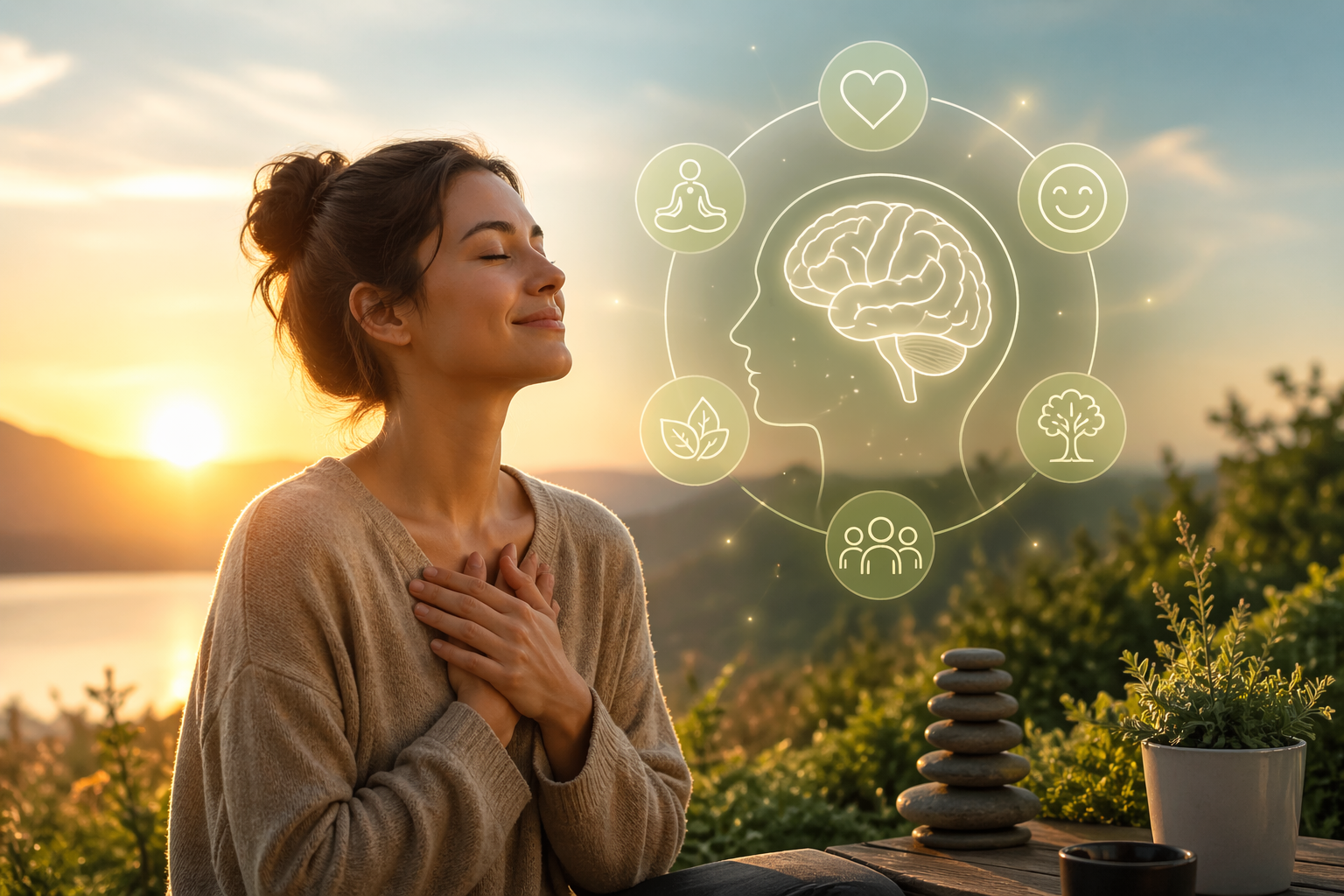
Practicing gratitude daily can improve mental well-being and emotional balance.
You do not need to make drastic lifestyle changes to develop the gratitude habit. Frequently, small, regular practices are the most effective. The following are some of the easy methods of adding gratitude to daily life.
Write A Gratitude Journal
One of the most popular gratitude practices is journaling.
Every day, list three things you are thankful for at the end of the day. They need not be significant life accomplishments. The most important things are usually the tiniest ones.
Examples might include:
- A nice chat with a friend
- A stroll in the open air
- A warm cup of tea after a long day
With time, this practice will condition your brain to observe positive things in the course of the day.
Stop And Reflect In Tough Times
The power of gratitude can be particularly effective in stressful circumstances. When you realize that negative thoughts are overwhelming you, stop and softly tell yourself:
What is one thing about this moment that I like?
It could be as simple as the following:
- Access to clean water.
- A well-wishing message from a person you love.
- A moment to breathe and reset.
This slight change will allow you to relax your mind and make your emotions less intense.
Show Appreciation To Others
When people share gratitude, it becomes even stronger. Find time to remind people who are in your life that you value them.
A text message, meaningful praise, or a note of gratitude can reinforce the bonds between people and enhance the emotional health of both.
Human connection is among the most powerful factors to promote mental health, and gratitude fosters such connections.
When Thanksgiving Is Abused
Despite the goodness of gratitude, in some cases, it is misconstrued.
There are those individuals who inadvertently make gratitude a form of guilt.
As an illustration, one may think:
I need not be sad. I have a better life than many.
Or:
There is so much to be thankful for, so why am I still struggling?
Such thoughts may cause individuals to feel embarrassed about their feelings. Gratitude does not intend to replace suffering.
Anxiety and depression are mental health challenges that do not portray ungratefulness. Numerous psychological and biological determinants shape these complicated experiences.
One must never put gratitude as an instrument of self-criticism.
People Can Mingle Thankfulness With Sorrow
A both-and attitude toward gratitude is one of the healthiest approaches to gratitude. This implies the ability to understand that there may be two emotional experiences simultaneously.
You may be thankful and yet sad. You may enjoy some aspects of your life, but at the same time, cope with challenging emotions.
For example:
- You may be missing loved ones and be thankful for technology, which allows you to remain connected.
- You may be nervous about the changes to come, and you will be thankful to have close friends.
- You may experience an overload of obligations and be grateful for chances or connections.
Gratitude does not eliminate pain. Rather, it offers emotional equilibrium and outlooks in difficult moments.
The Positive Effects of Thankfulness in the Long-term
In the long run, gratitude may make a significant difference in terms of mental and physical well-being. Individuals who practice gratitude regularly can enjoy:
- Reduced stress and anxiety
- Better mood and emotional strength
- Better sleep quality
- Stronger relationships
- Greater life satisfaction
According to research by Berkeley’s Greater Good Science Center, people who practiced gratitude consistently showed greater neural sensitivity in areas of the brain linked with learning and decision-making. In general, the trick is to be consistent. Practice enhances gratitude as a mental ability. It does not take many minutes a day to change the manner in which your brain interprets experiences.
Conclusion
Thanksgiving is not a solution to life problems, but it is an effective cognitive practice that can change the way we perceive the world.
Focusing on appreciation and gratitude assists in breaking the negative thought patterns and reconnecting the mind with the present moment. It promotes emotional stability, builds resilience, and enables us to seek meaning even when we are going through challenging situations.
Above all, pairing gratitude with other stress-reducing habits can make a lasting difference in how you experience daily life. The ability to accept hardships but still enjoy the beneficial things can be a tremendous difference in our mental health.
Frequently Asked Questions (FAQs)
What is gratitude in psychology?
In psychology, gratitude refers to the practice of recognizing and appreciating the positive aspects of life. It involves acknowledging benefits received from others, circumstances, or everyday experiences.
Can gratitude help reduce anxiety?
Yes. Practicing gratitude can help shift attention away from negative thoughts and worries. By focusing on positive experiences, individuals may experience reduced stress and improved emotional balance.
How often should I practice gratitude?
Many experts recommend practicing gratitude daily. Even spending a few minutes reflecting on positive moments or writing in a gratitude journal can provide mental health benefits over time.
Is gratitude effective for depression?
Gratitude can support emotional well-being and may help reduce some symptoms of depression. However, People should view it as a supportive practice rather than a replacement for professional mental health treatment.
What are simple ways to practice gratitude?
Simple gratitude practices include keeping a gratitude journal, expressing appreciation to others, reflecting on positive moments during the day, and taking time to notice small joys in everyday life.