
A headache in the back of the head may be dull, tight, and even sharp. It frequently creeps up on you when you are not even expecting a headache. One day, I remember after spending hours on my laptop that I felt some pain at the back of my head, which would not subside, no matter how much rest I had taken. And if you have experienced something like this, you are not alone.
This guide will take you through the headache in the back of the head, warning signs, and practical remedies that you can apply at home.
Understanding Back-of-Head Headaches

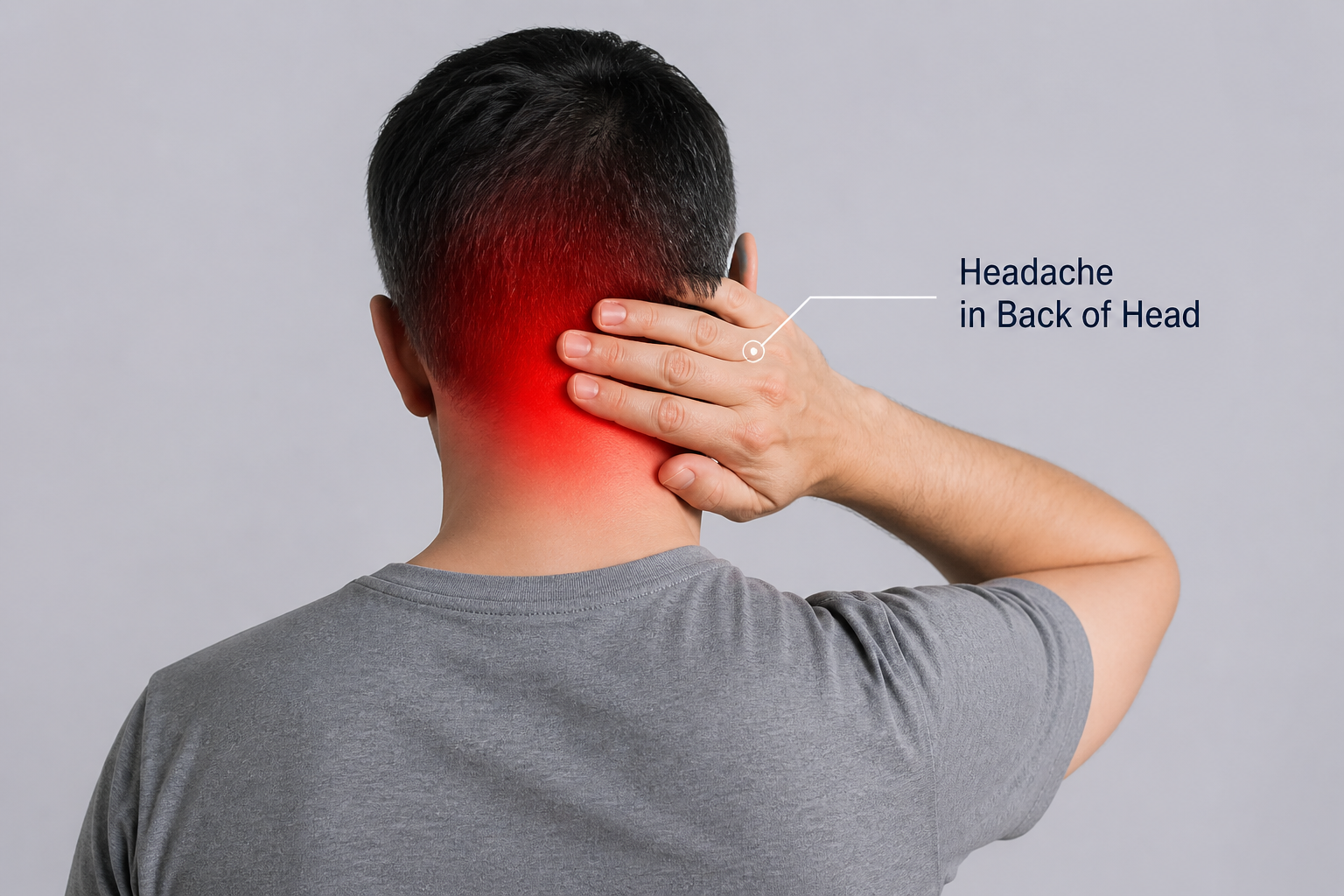
Pain located at the lower back of the head near the neck (occipital area)
A headache in the back of the head (sometimes referred to as an occipital headache) is a condition that occurs in the lower portion of your skull, by the neck. This kind of rear head pain could be attributed to muscles, nerves, or even posture. Some people feel:
- Tightness or pressure
- Sharp or stabbing pain in the back of the head
- Scalp-to-neck pain
- Pain with stiffness at the base of the skull
Ordinary Causes of Headache
The most significant step towards relief is to understand the root cause. Let’s break down the most common triggers.
1. Tension Headache (Most Common Cause)
A tension headache at the back of the head is generally caused by stress or muscle strain.
Symptoms:
- Tight band-like pressure
- Together with neck pain and headache
- Mild to moderate pain
Often linked with:
- Stress-related headache
- Muscle tension in the neck
- Poor posture headache
2. Occipital Neuralgia
It is a nerve-related disorder that occurs in the occipital nerves.
The symptoms of occipital neuralgia are the following:
- Sharp, shooting pain
- Scalp pain and burning
- Sensitivity to touch
- Nerve pain in the scalp
3. Cervicogenic Headache
A cervicogenic headache occurs in the neck and extends to the head.
Causes include:
- Spinal alignment issues
- Injury or stiffness
- Poor sitting posture
This can frequently result in a headache behind the head with limited neck movement.
4. Migraine vs Tension Headache
In some cases, rear head pain can also be due to migraine, although more prevalent on one side.
Migraine symptoms:
- Throbbing pain
- Sensitivity to light
- Nausea
- Head pressure symptoms
The difference between migraine and tension headache can help in identifying the appropriate treatment.
5. Lifestyle Triggers
Most of our daily routines can cause chronic back pain:
- Dehydration headache
- Sleep deprivation headache
- Poor posture
- Stress and anxiety
- Long screen time
It is worth noting that unmanaged stress plays a major role here. If you want to address the root cause, learning stress management techniques can make a real difference in how often these headaches appear.
What Causes Pain at the Back of Your Head?
If you’re wondering “why do I have a headache in the back of my head?”, the answer is often a mix of:
- Muscle tension
- Neck strain
- Stress
- Poor sleep
Even the simplest things, like sleeping in an improper position, can lead to a headache at the back of the head after sleeping.
Warning Signs You Should Never Ignore
The headache behind the head may be accompanied by other symptoms, such as:
- Headache and stiff neck
- Dizziness
- Tension behind the head
- Pain when lying down
When to Worry About It?
Consult a doctor in case you notice:
- Sudden severe pain
- Vision problems
- Numbness or weakness
- Constant back of the head pain that is persistent and is experienced over days
- Unclear cause of headache in the back of the head and dizziness
These could be neurological red flags.
Natural Remedies That Actually Work
In case your headache is not severe, these easy solutions may be of assistance.
1. Improve Your Posture
The major cause of poor posture headaches is bad posture.
Tips:
- Have your screen at eye level
- Sit up with back support
- Have breaks after every 30-60 minutes
2. Use Heat or Cold Therapy
- Cold pack → decreases inflammation
- Warm compress → relaxes muscles
Exceptional in the bottom of the skull, pains, and strain.
3. Stay Hydrated
Dehydration is rather a neglected aspect. Take enough water to prevent dehydration headaches.
4. Gentle Neck Stretches
Simple exercises to relieve muscle tension in the neck:
- Slow neck rotations
- Shoulder rolls
- Chin tucks
5. Manage Stress
Stress is a huge precipitant.
- Try deep breathing
- Meditation
- Light exercise
And if persistent stress is also affecting your overall mood, exploring natural ways to cope with low mood can support both your mental and physical well-being.
6. Sleep Better
Lack of sleep may result in a sleep deprivation headache.
Improve sleep by:
- With a supportive pillow
- Having a regular sleep schedule
- Screen time before sleep should be avoided
How to Relieve a Headache in the Back of the Head
In case of immediate help:
- Sleeps in a small dark room
- Massage the neck area
- Drink water
- Apply essential oils (such as peppermint)
These are the best methods to find out how to get rid of an occipital headache fast. According to the Mayo Clinic, persistent or worsening headaches, especially those combined with neck stiffness or vision changes, should always be evaluated by a doctor.
Home Treatment of Headache at the Back of the Head and Neck
For ongoing discomfort:
- Stretch daily
- Improve workstation ergonomics
- Use a proper pillow
- Stay active
These are effective in treating headaches in the back of the head and neck at home.
Is It a Serious Health Problem?
Most of the time, it is not severe and associated with lifestyle. Nevertheless, this type of chronic back pain or abnormal symptoms should never be overlooked.
Prevention Tips
To prevent headaches in the future:
- Maintain good posture
- Stay hydrated
- Reduce stress
- Sleep properly
- Exercise regularly
Minor modifications can be of great benefit.
Final Thoughts
A headache behind the head can be uncomfortable, but in most cases, it can be treated by making some simple lifestyle changes. Learn to listen to your body. At times, the only thing it requires is rest, hydration, and a break without ongoing daily stressors. In case your symptoms continue to be or become worse, you should not ignore them. Those issues can be prevented by attention that can be given in the early period of life.
Frequently Asked Questions (FAQs)
Kali Stuart
October 12, 2026 at 11:41 am
Their posts always leave us feeling informed and entertained. We’re big fans of their style and creativity.