
Wanna be the person in the room everyone quietly notices?
Understand the muscle-building workout. And how to increase muscle mass with a muscle-building diet, protein intake, and recovery tips. This is the ultimate beginner’s guide to rapid muscle growth.
A lot of people new to fitness tend to believe that it takes hours of exercise to get fit. I used to be convinced that way. I thought that if I trained harder every day, I would see results quicker. But I learned that training, eating, and resting all go together when it comes to building muscle.
Building muscle can be beneficial in any aspect of life, whether your fitness objective is strength, a lean body, or enhanced fitness. It enhances posture, self-confidence, fat loss, and daily activities.
What Does Building Muscle Mean
Muscle building is the process of adding muscle mass and building it up with resistance training and a healthy diet. This is called muscle hypertrophy.
Small tears occur in the muscle fibers during activities such as squats, push-ups, bench press, or deadlift. These fibers are repaired during the recovery phase and result in stronger and bigger muscles.
That is why exercise is not the answer. Muscle repair and nutrition are equally vital components of muscle growth.
Why Muscle Growth Matters for Health and Fitness
Muscle Growth is essential for health and fitness.
Growth in muscles doesn’t just happen for the athlete or bodybuilder alike. It is of paramount importance for all.
Muscle mass enhances metabolism, burns more calories, promotes joint wellness, secures bones, and decreases the threat of injury. It also enhances balance, stamina, and performance in the body.
Those who have stronger muscles tend to feel more active, more energetic, and more confident in their daily life.
How to Build Muscle Effectively
Follow a Strength Training Routine
The most effective method for gaining muscle is to have a good strength training plan.
Use compound exercises, as these work more than one muscle group at a time. These include:
Squats
- Deadlifts
- Bench Press
- Pull-Ups
- Push-Ups
- Rows
- Shoulder Press
- Lunges
These exercises help to build muscle more quickly than isolation exercises.
Work out 3-5 times a week as per ability. To the new person, it is more important to start off with form and consistency than with lifting huge weights right away.
Progressive Overload for Muscle Growth
Progressive overload is one of the largest keys to muscle building.
This will involve gradually increasing the difficulty of the work for the muscles to keep them growing.
You can do this by:
- Increasing weights
- Adding more repetitions
- Increasing sets
- Improving exercise form
- Decreasing rest time between sets
When muscles are performing the same activity each week, they grow slowly. Little gains over time make great gains over the week. For a deeper breakdown, Healthline’s guide on progressive overload is worth a read.
Importance of Rest and Recovery
People work hard, but they forget to recover. That is the reason they don’t make the progress they should.
Muscle is not built while exercising. They increase during rest and repair.
If you do not recover, you could be more tired, weaker, and risk injury.
Nutrition for Muscle Growth

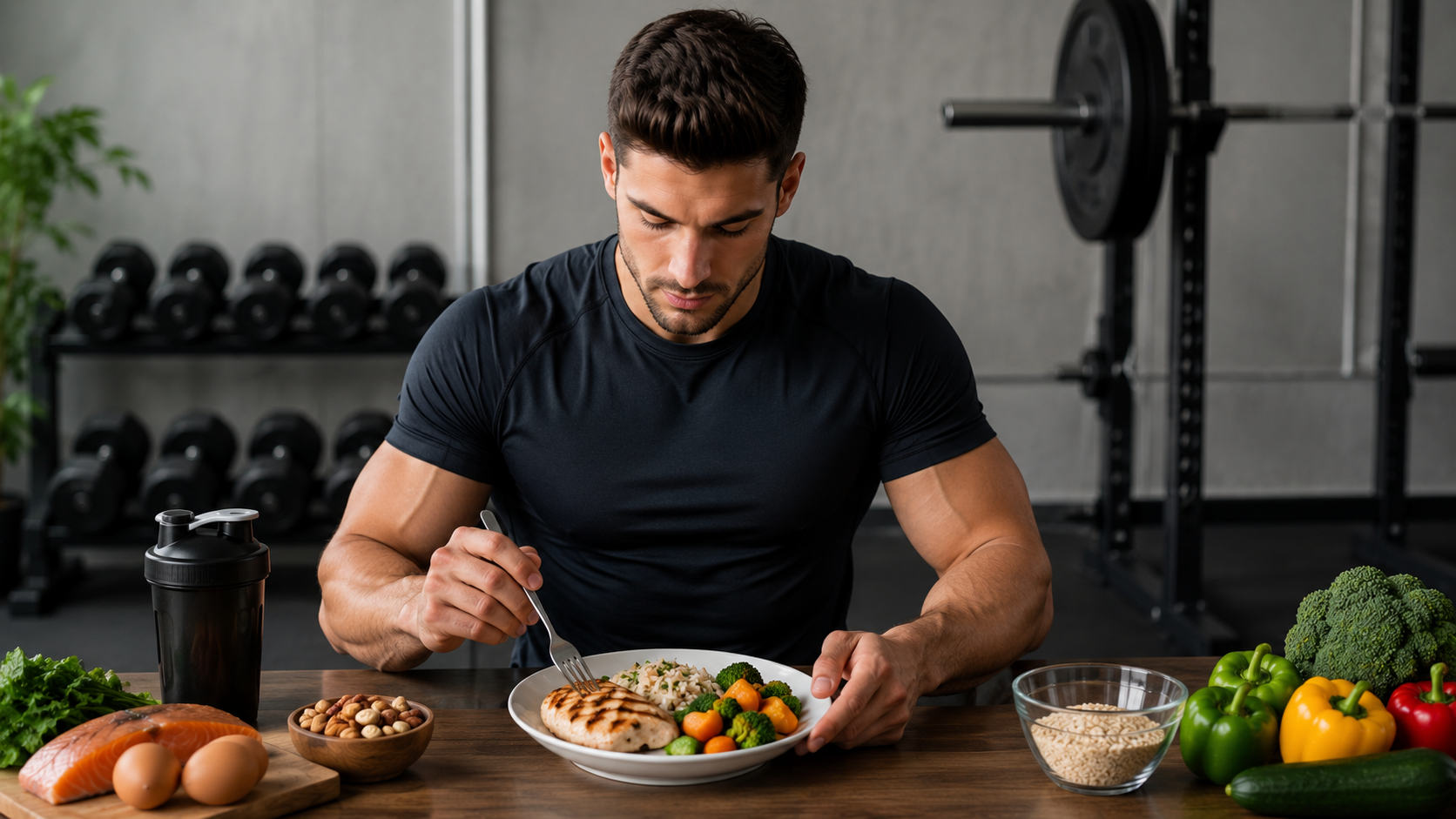
A balanced diet and proper workout routine can help support faster muscle growth.
Why Calories Matter
For muscle growth, your body requires sufficient calories.
If you eat insufficient calories, your body has a hard time restoring itself and creating new muscle. That’s why it’s advisable to have a slight calorie surplus.
Calorie excess is defined as consuming a few extra calories per day.
It’s about gaining muscle without gaining excess body fat.
Best Food to Build Muscle
The optimal foods for muscle building are the nutrient-dense foods that are rich in protein, carbohydrates, and healthy fats.
The best muscle-building foods to eat are:
- Eggs
- Chicken breast
- Fish
- Greek yogurt
- Rice
- Oats
- Bananas
- Sweet potatoes
- Nuts
- Milk
- Cottage cheese
- Lentils
- Beans
- Peanut butter
Always think of using whole foods first, before supplements.
Healthy Fats and Carbohydrates for Energy
Carbohydrates provide energy for exercise.
Good carbohydrates include:
- Rice
- Oats
- Fruits
- Potatoes
- Whole wheat bread
Healthy fats include:
- Avocados
- Olive oil
- Nuts
- Seeds
- Fatty fish
Don’t rely heavily on empty calories from junk food, as quality is as important as quantity.
Knowing what to eat before and after your workout makes a big difference.
Hydration and Muscle Performance
Water is an important substance for muscle function and recovery.
Dehydration, even slight, can decrease strength, energy, and endurance for exercise.
Drink plenty of water during the day, particularly before and after physical activity.
Getting hydrated can be quite easy, but it is directly related to muscle growth.
How Much Protein to Develop Muscle
Muscle repair and growth are most dependent on protein.
For beginners, it is better to distribute protein for the day in smaller portions rather than taking it in one sitting.
A well-balanced protein diet helps to improve recovery and results.
Protein Intake Based on Body Weight
This is a protein intake based on body weight calculator.
The recommended protein intake for muscle building is 1.6 to 2.2 g per kg of body weight daily. A range backed by research on protein and muscle synthesis.
For instance, an 80 kg person might require 112 to 154 grams of protein per day, based on their workout level and fitness objectives.
Best Protein Sources for Muscle Gain
The most nutritious sources of protein are:
- Chicken
- Fish
- Eggs
- Lean beef
- Greek yogurt
- Cottage cheese
- Milk
- Tofu
- Lentils
- Beans
- Whey protein (as required)
While supplements may be beneficial, the best thing is to always get real food. If you want to go deeper, read our guide on building muscles naturally.
How Long Does It Take to Increase Your Muscle Size
Many people who are beginning ask how long it takes to build up their muscles.
Strength gains can be seen in most people within 2-4 weeks. With good training and eating, the muscles will become visible in about 8-12 weeks.
It takes time to build muscle. The progress can be very quick, but it is not possible to achieve results overnight.
Factors That Affect Muscle Gain Speed
Some factors can affect your muscle gain speed, which are the following:
- Genetics
- Workout quality
- Protein intake
- Calorie intake
- Sleep quality
- Stress levels
- Training consistency
Do not compare yourself to others; think about how well you have improved yourself.
Common Mistakes That Slow Progress
These are the common mistakes that can impede muscle growth:
- Eating less than the normal food intake.
- Low protein intake
- Poor sleep habits
- Too frequent a change of exercise routines
- Using improper lifting techniques
- Skipping rest days
- Rapid and impulsive outcomes without persistence
Avoiding these mistakes can speed up your muscle-building journey.
Workout Plan for Beginners
A very basic beginner training regimen to build muscle may consist of:
1st Day: Chest + Triceps
2nd Day: Back + Biceps
3rd Day: Rest
4th Day: Legs + Shoulders
Targeted workout: Full Body Workout
Include light cardio or Active Recovery on Day 6.
Day 7: Complete Rest
Maintain good body alignment, slow motion, and gradual movement.
Simple tasks repeated regularly are more effective than complex schemes that are not adhered to.
Final Thought
There is no magic pill or shortcut to muscle building.
It’s all about smart training, proper nutrition, adequate protein intake, good sleep hygiene, and sticking to it for months, not days.
Muscle building is a lot more than just about changing your body; it is about developing discipline, confidence, and strength for life.
Frequently Asked Questions(FAQs)
Yes, you can gain muscle at home with just the weight of your own body, exercises such as push-ups, squats, lunges, dips, and resistance bands. The principles of Progressive Overload are still valid.
No, moderate exercise is beneficial to the heart and recovery. Excessive amounts of vigorous exercise without adequate calories can hinder muscle building.
Protein powder can be added or not. It’s only helpful when eating enough protein is challenging. Whole foods are always best.
Even people who are just beginning can see good results after 3-5 days of aerobic exercise, with adequate rest in between.