
Happiness is something everyone wants. But for years, we’ve been searching for it in the wrong places.
It often seems tied to getting a better job, more money, or another person’s approval. The fact is that fulfillment is not to be found out there. It is from the inside out.
Happiness is important because it’s not just a feeling. It impacts your health, relationships, work, and even your self-esteem. Those who prioritize their emotional well-being generally have better sleep, cope better with stress, and have more fulfilling relationships.
When we are happier, we are more mentally healthy as well, and this is a growing concern in our busy lives. Comparing social media influence and long working hours can cause mental exhaustion. So, it’s important to practice happiness every day. If screen time feels like part of the problem, a digital detox can be a great place to start. Luckily, happiness is a thing that can be learned.
This is not a guide to toxic positivity or to make life look perfect. It’s all about simple, honest things you can do to improve your health.
What is Happiness and Why Does It Matter
Happiness is not an ongoing state of joy. That is a myth. Real sense of contentment, what psychologists call subjective well-being, is a blend of feeling good most of the time. It is having a sense of purpose and being at peace with your life.
It is the contentment following a feast. The sense of emotional connection you experience when someone is really listening to you. A sense of relaxation after overcoming a difficult challenge.
Why does it matter? Because it has a direct connection with your physical well-being, your relationships, and even how long you live. One of the longest-running studies on happiness, conducted at Harvard, revealed that close relationships make people happier than money or fame does.
Build Positive Habits for a Happy Life
Your daily routine shapes your mood more than you think. There is no need to make a radical overhaul of your life. Just start small.
- Move your body. Even a short stroll can lift your mood. Exercise triggers your brain’s feel-good chemicals, endorphins.
- Sleep enough. It is difficult to do everything when you don’t sleep well. Adults require 7–9 hours.
- Limit social media. Spending hours scrolling doesn’t make anyone feel better. Implement a time limit and adhere to it.
- Practice gratitude. Write 3 things that went well at the end of the day. It seems simple enough, but it works. Research has demonstrated that gratitude journaling has a positive effect on life satisfaction time and time again.
- Spend time in nature. Just 10 minutes outside can help to lower stress and improve focus.
Improve Your Mindset and Reduce Negative Thinking
Negative thought patterns, such as assuming the worst or blaming yourself for everything, quietly steal your joy. The good news is that your brain can be reprogrammed. For a deeper look at how these patterns affect your mind, check out our guide on negative thinking.
Here are a few things that actually help:
- Name your thoughts. When a negative thought comes, just notice it. Say to yourself, “There is that anxious thought again.” This little action helps to separate you from the thought.
- Challenge your assumptions. Check to see if this thought is based on fact or fear.
- Focus on what you can control. Worrying about things you can’t control is tiring. Direct your energy inward.
This is the fundamental concept behind Cognitive Behavioural Therapy (CBT), widely recommended for managing negative thinking patterns.
Healthy Relationships and Self-Care
There’s no need to pour from an empty cup. Self-care is not selfish. It is essential.
Here is what works:
- Be present when you are with people. Put the phone away.
- Keep it direct and polite. Resentment is less when there is honest communication.
- Let go of relationships that continue to deplete you.
How to Change Your Mood When You Feel Down
Sometimes it’s normal to feel low. It’s difficult to remain in a negative mindset, but it does not need to be a permanent one.
Small Daily Steps That Help During Depression
When you’re in a tough patch, things can seem like too much of a challenge. That is okay. Start absurdly small.
- Drink a glass of water.
- Open a window.
- Text a trusted person.
- Take a 5-minute break outside.
A few more things worth trying:
- Stick to a routine. Chaos can be a breeding ground for depression. A loose structure like wake up, eat, move provides anchors for your brain.
- Do something meaningful every day. It can be helping others, making a good meal, or completing a small task. A sense of accomplishment matters.
- Reduce alcohol. It seems to help in the moment, but alcohol is a depressant. It deepens sadness over time.
7 Tips to Live a Happier and More Fulfilled Life

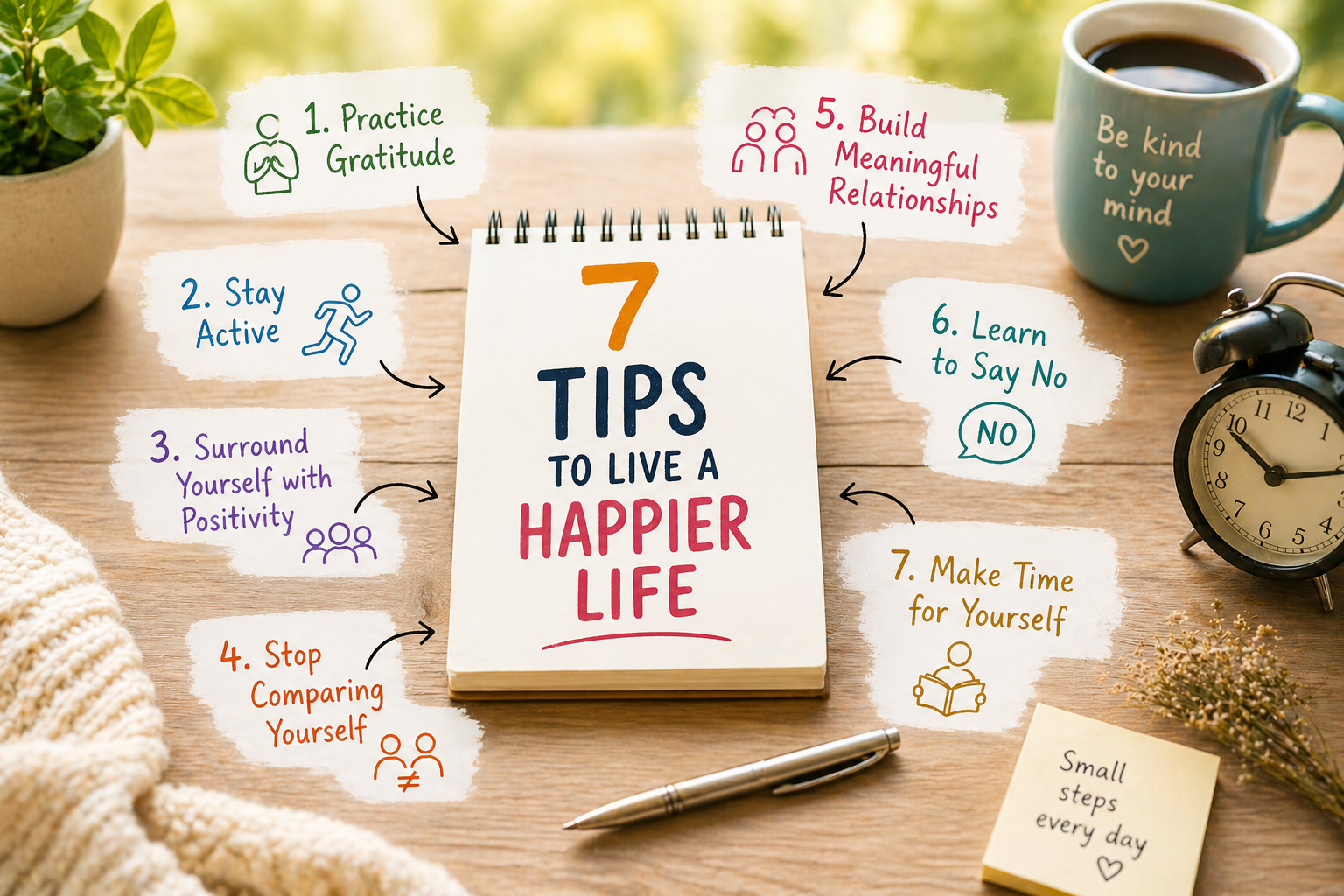
Simple habits and positive mindset changes can help improve mood and overall well-being.
1. Wake Up Grateful
The easiest method to have a happier life is to practice gratitude. Instead of going through the day with what causes you anxiety, reflect on what you have to be grateful for. It can be something as simple as your health, family, roof over your head, or a cup of coffee.
Gratitude turns the mind to the good things we have.
2. Move for an Hour a Day
Exercise is good for your emotions. Physical activity is beneficial for more than burning calories. It is one of the best things that you can do to make yourself happy, as exercise can make you happy. It’s not necessary to join a gym. Walking is a good way to relax and get energy levels up, as are stretching, dancing and cycling, which takes about 20 minutes.
Being happier every day can be achieved by exercising, as it is healthy for you physically and mentally.
3. Steer Clear of Negative People and Circumstances
You’re influenced by others. When they are negative, critical, or degrading, they can take away our peace. This doesn’t mean that you have to cut off all relationships, but it does mean you need boundaries. Sometimes, it takes doing without those who don’t value you for a happier life.
4. Don’t Compare Yourself to Others
Facebook can make you feel like you’re not as good as everyone else. People are succeeding in life and earning more, and they are able to do a lot more than you are. But let’s not compare because we’re comparing reality with make-believe. This is by experience. I used to feel I wasn’t living as much as I could because I compared my life to others. I started taking my focus off myself, and my life became less of a burden.
Limit the comparison and learn how to improve mental health.
5. Build Meaningful Relationships
Close friendships are a major reason for happiness. Talking, being supported and understood are more crucial than you might think. Be close to others who feel safe, loved and valued. Just a chat with a friend can help.
The best thing you can do for happiness every day is to connect with people rather than your phone.
6. Say No to Guilt
Often, a person is unhappy because they are exhausted from trying to accommodate others. You often have to say no to something else to say yes. It is not rude to be able to say no! It involves taking responsibility for your time, energy and health.
This lesson was vital to me in my life when I realized that my burnout was due to imbalance, not to overwork. One of the keys to happiness is setting boundaries.
7. Live Life for the Joy
Too many grown-ups consider happiness as a thing which they are able to achieve only once their assignments are finished. However, life isn’t that way. These are important: reading, gardening, cooking, keeping a diary, painting, or just sitting alone with music.
Daily Habits for a Happier Life

Simple daily habits can help you build a happier and more balanced life.
1. Move Your Body Every Day
Physical activity is one of the fastest ways to improve mood. You don’t need intense workouts; just simple movement like walking, stretching, or light exercise can boost your energy and clear mental stress. Movement helps your body release feel-good chemicals that naturally improve your mood and reduce tension.
Even 10-15 minutes daily can make a noticeable difference in how you feel.
2. Prioritize Quality Sleep
Sleep affects everything: your mood, focus, patience, and emotional balance. When you don’t sleep enough, even small problems feel overwhelming.
Try to maintain a consistent sleep routine and aim for enough rest each night so your body and mind can fully recover. A well-rested mind naturally feels calmer, more positive, and more productive during the day.
3. Practice Gratitude Daily
Gratitude is a powerful habit that shifts your focus from what’s missing to what you already have. It doesn’t have to be anything big; small things like a kind message, a warm meal, or a peaceful moment all count.
When you regularly notice and appreciate small positives, your mind naturally becomes more optimistic and less stressed.
Weekly Habits to Build Inner Balance
4. Declutter Your Space
A messy environment often leads to a messy mind. Spending just a short time each week organizing your room, desk, or wardrobe can instantly make you feel lighter and more in control.
Let go of things you don’t use and create a clean, peaceful space that supports clarity and focus.
5. Spend Time with People Who Matter
Human connection plays a major role in emotional well-being. Even one meaningful conversation with a friend or loved one can improve your mood significantly.
Try to set aside time each week to connect with people who make you feel supported, understood, and valued.
6. Spend Time in Nature
Nature has a calming effect on the mind. Whether it’s a park, garden, or even your rooftop, spending time in fresh air can reduce stress and refresh your thoughts.
A short weekly walk outdoors can help you feel more relaxed, grounded, and mentally refreshed.
Monthly Habits for Emotional Growth
7. Give Back in Small Ways
Helping others creates a sense of purpose and fulfilment. You don’t need big actions; even small acts like helping a neighbour, supporting a friend, or offering kindness can make a difference.
When you give, you often feel more connected and emotionally satisfied.
8. Enjoy Your Own Company
Spending time alone is not loneliness; it’s self-connection. Going out alone, enjoying a meal, or simply sitting with your thoughts helps you understand yourself better.
It builds confidence and helps you enjoy life without depending on others for happiness.
9. Reflect on Your Thoughts
Take a few moments each month to check in with yourself. Think about how you have been feeling, what has improved, and what needs attention.
This simple reflection helps you stay aware of your emotional state and keeps your mind aligned with your personal growth.
Yearly Habits for Long-Term Happiness
10. Review Your Life Progress
Once a year, take a step back and reflect on your journey. Look at your achievements, challenges, and emotional growth.
This helps you understand how far you have come and gives you clarity about where you want to go next.
11. Reevaluate Your Goals
Life changes, and so do your priorities. Some goals may no longer match your current situation or desires, and that’s completely okay.
Letting go of outdated goals creates space for new and more meaningful ones.
12. Take Care of Your Health
Your physical and mental health are deeply connected. Regular check-ups, proper self-care, and attention to your body help you maintain long-term well-being.
When your body feels healthy, your mind naturally becomes more stable and positive.
Final Thoughts
Happiness is not a destination you arrive at and stay forever. It is a practice, something you build through choices, habits, and how you treat yourself and others.
You will have hard days. That is not failure. What matters is that you keep coming back to yourself with patience, with honesty, and without judgment. On low days, a few simple coping habits can make a real difference.
Start with one small thing today. That is enough.
Frequently Asked Questions (FAQs)
1. Can I become happier just by changing habits?
Yes, small daily habits can significantly improve your mood and overall mental well-being over time.
2. How long does it take to feel more positive?
It depends on consistency, but many people notice improvements in a few weeks of practicing healthy habits.
3. Can you train yourself to be happier?
Yes. Research in positive psychology shows that around 40% of your pleasure is influenced by intentional activities, your habits, mindset, and choices. Genetics plays a role, but it is not the whole story.
4. What is the fastest way to improve your mood?
Physical movement is one of the quickest mood boosters. Even a short walk, dancing to a song, or stretching for a few minutes can shift how you feel almost immediately.
5. Is it normal to feel unhappy sometimes, even if your life is good?
Absolutely. Happiness fluctuates; that is human. Feeling down despite having good things in your life does not mean you are ungrateful or broken. If the feeling persists, speaking to someone can help.
6. How do relationships affect happiness?
Deeply. Loneliness is one of the biggest risk factors for poor mental health. Meaningful connections, even just a few, make a significant difference in how happy and supported we feel.