
Wanna be like Arnold? It is not as easy as you think!
Building a well-built chest takes more than showing up. Most beginners grind for months without realizing their mistakes. The right chest workouts, proper technique, and smart nutrition are what actually move the needle.
This article will guide about chest workouts and suggests you best exercises for the upper and lower chest.
Why Chest Training Matters
The pectoralis major and pectoralis minor do more than just look good. They drive every pushing movement, support shoulder stability, and contribute to overall upper body strength. Skip chest training, and your rotator cuff takes the hit. A common root cause of chronic shoulder pain.
Common Chest Workout Mistakes
Hard work means nothing if the basics are not followed correctly. These are the most common errors holding people back:
- Elbows flared too wide: shifts stress to the shoulder joint, away from the chest
- Bouncing the bar: momentum replaces muscle, injury risk goes up
- Only flat pressing: the upper and lower chest stay underdeveloped
- No mind-muscle connection: without consciously squeezing the pec, other muscles take over
- Jumping weight too fast: form breaks down, chest stops being the primary mover
Best Chest Exercises for Overall Growth

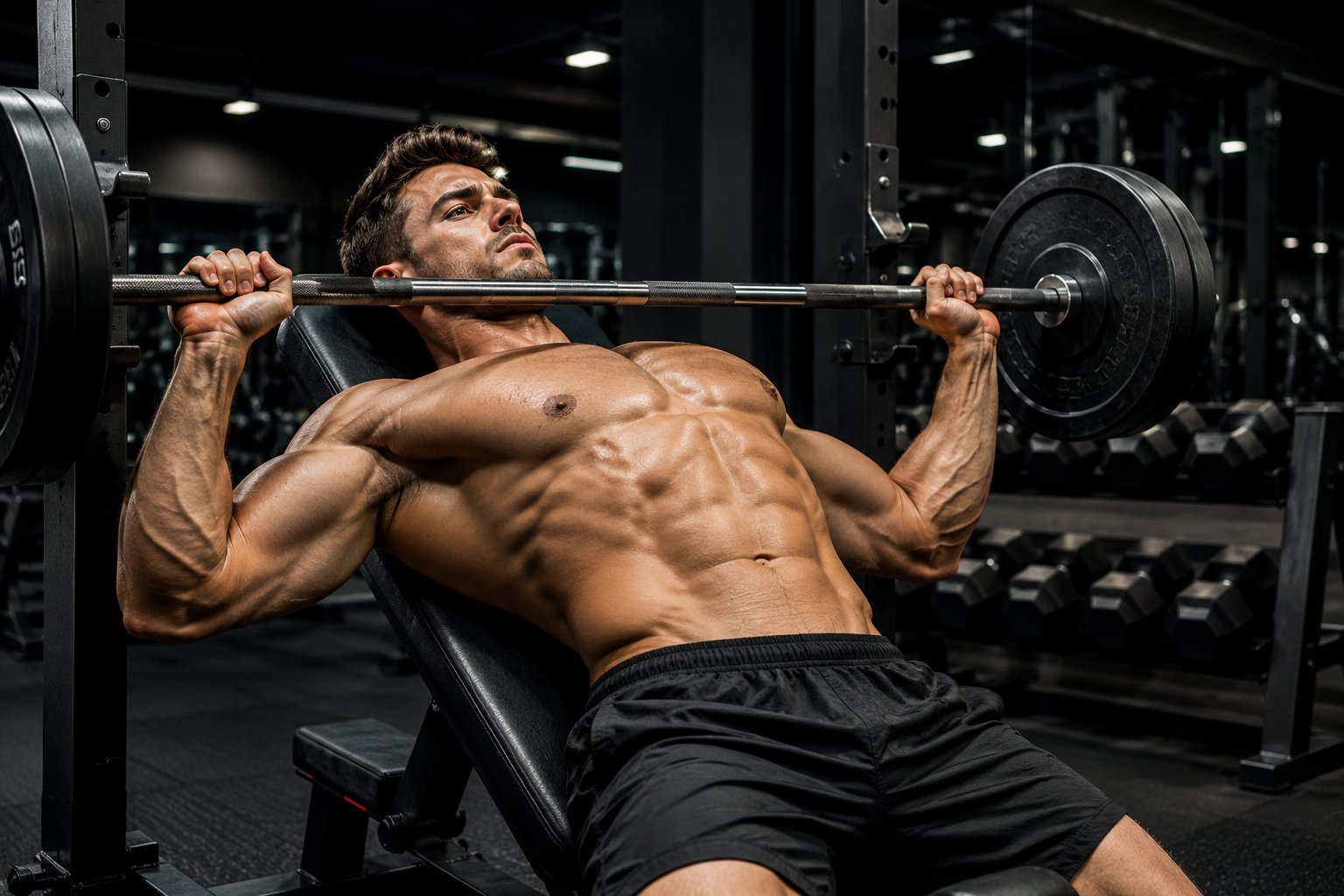
Chest workout exercise for building upper and lower chest muscles
Bench Press
The flat barbell bench press is necessary for any serious chest workout. It targets the mid-chest while bringing in the triceps and front deltoids as support.
Grip slightly wider than shoulder-width, lower the bar to your mid-chest with control, and press back up without locking the elbows. Keep feet flat, maintain a mild arch, not a bridge.
3–4 sets of 6–10 reps hit the sweet spot for both strength and muscle growth.
Push-Ups
Push-ups are the most accessible chest exercise available. They move through a natural arc, engage the core, and need zero equipment.
Hands just outside shoulder-width, body rigid, lower your chest close to the floor, then push back up. Slow the descent to 2–3 seconds to increase chest activation.
To keep progressing: archer push-ups, weighted push-ups, or feet-elevated variations.
Dumbbell Chest Press
Dumbbells let each arm work independently; the stronger side can’t carry the weaker one. That makes this one of the best chest exercises for fixing left-right imbalances.
The range of motion at the bottom is also deeper than a barbell, putting more time under tension on the pecs. Control the descent, feel the stretch, then press.
Upper Chest Workouts
The upper chest, the clavicular head of the pectoralis major, is underdeveloped in most people. Flat pressing barely touches it.
Incline Bench Press
Set the bench between 30 and 45 degrees. Above 45, the front delts take over. This range keeps the focus on the upper chest and builds that full, defined look near the collarbone.
Same technique as flat bench, no bouncing, no excessive arch. Research reviewed by Healthline Fitness confirms that the incline press activates the upper pecs significantly more than flat pressing.
Incline Dumbbell Press
Same angle, but dumbbells allow a slight wrist rotation during the press, easier on the shoulders for most people. The deeper stretch at the bottom makes this a strong pick for upper chest development.
Go a bit lighter than your flat dumbbell press. Control and range of motion matter more than load here.
Lower Chest Workouts
The lower chest gives the pec that clean separation and defined drop beneath the muscle. Decline angles hit it best.
Decline Bench Press
A 15–30 degree decline targets the sternal head of the pectoralis major more directly than flat or incline work. Most people can handle more weight in this position, which means greater mechanical tension on the lower chest.
Full range of motion, don’t let the extra load tempt you into cutting reps short.
Chest Dips
Chest dips are among the most effective lower chest exercises, and they work with just bodyweight or added load. Lean the torso slightly forward, let the elbows flare out, and lower until you feel a deep stretch in the lower pecs.
Press back up without fully locking out. Once bodyweight feels easy, use a dip belt to keep progressing. Works well as a finisher at the end of any chest session.
Tips for Faster Chest Muscle Growth
Protein and Recovery
Muscle grows during rest, not during training. The chest workouts create the stimulus, sleep and protein do the building. If you’ve ever wondered why you feel tired after a workout, it comes down to how hard your body works during that recovery window.
Target 0.7–1g of protein per pound of bodyweight daily. Chicken, eggs, fish, and Greek yogurt are solid staples. As noted by the Mayo Clinic, active lifters should stay on the higher end of that range.
Most people need 48–72 hours between chest sessions. Training chest every day doesn’t accelerate growth; it stalls it.
Form and Consistency Over Everything
The best-developed chests aren’t always on the strongest lifters. They belong to the most consistent ones, people who show up weekly, add load gradually, and execute every rep cleanly.
Log your sessions. If reps and weight aren’t moving up over time, your chest has no reason to adapt. Progress compounds slowly, then visibly.
For evidence-based training principles and safe exercise progression, organizations like ACE Fitness provide widely accepted guidelines for strength training and muscle development.
Conclusion
Strong chest development comes down to a few things done consistently: hitting upper and lower chest workouts alongside flat pressing, maintaining form on every rep, recovering properly, and eating enough protein. This guide covers all three regions, with no gaps.
Frequently Asked Questions
How often should I train my chest per week?
Twice a week works best for most people, with enough volume to grow, enough rest to recover.
Can push-ups alone build a good chest?
Yes, if you keep making them harder. Weighted, archer, and decline push-ups can drive real chest development over time.
My upper chest looks flat even though I bench regularly. Why?
Flat pressing barely engages the upper pecs. Add incline barbell and dumbbell pressing to fix that.
How long before I see results?
With consistent chest workouts and proper nutrition, visible changes typically show up within 8–12 weeks. Structural development takes longer but lasts.