










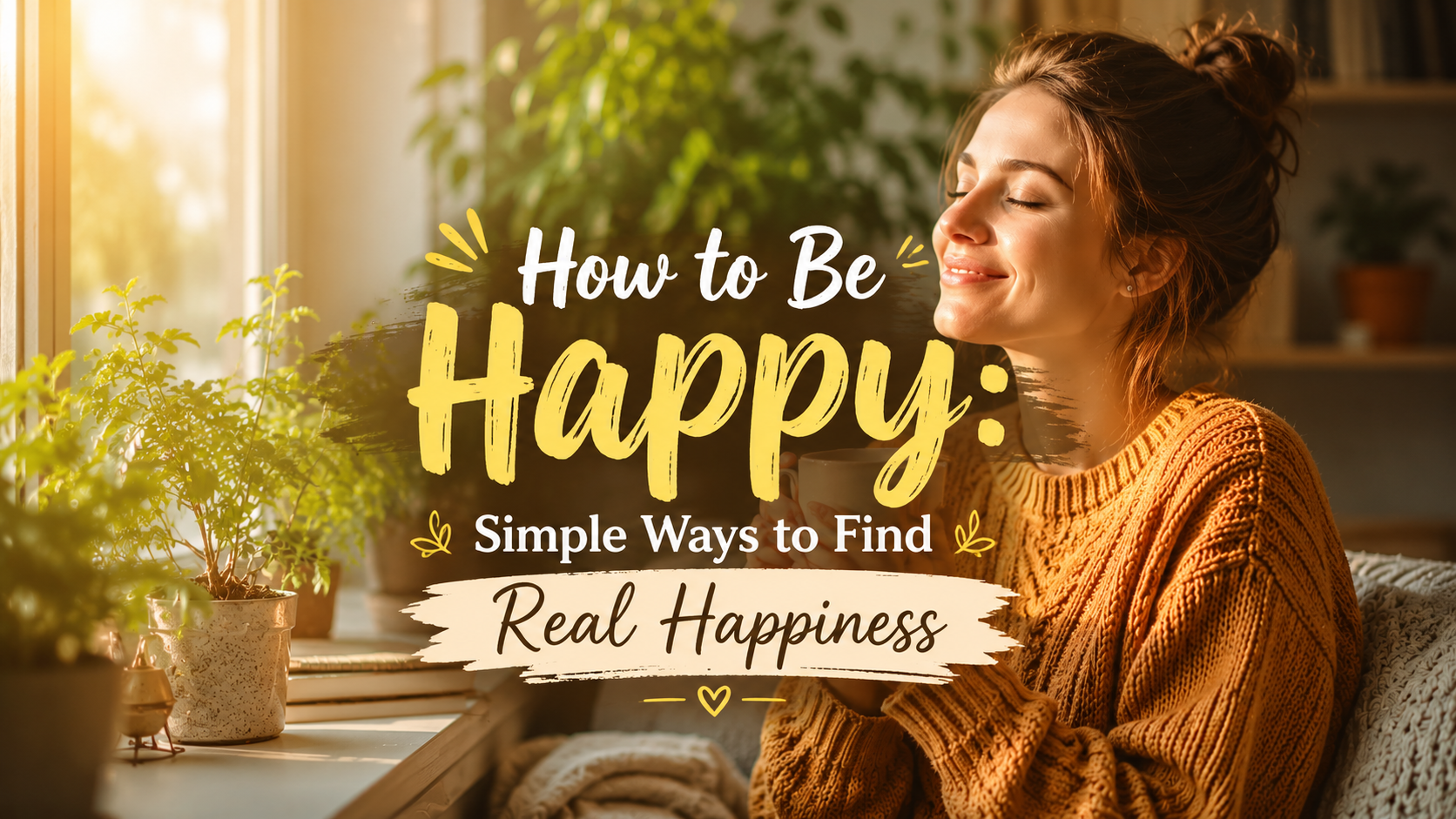
Happiness is something everyone wants. But for years, we’ve been searching for it in the wrong places. It often seems tied to getting a better job, more money, or another person’s approval. The fact is that fulfillment is not to be found out there. It is from the inside out.
This is not a guide to toxic positivity or to make life look perfect. It’s all about simple, honest things you can do to improve your health.
What is Happiness and Why Does It Matter
Happiness is not an ongoing state of joy. That is a myth. Real sense of contentment, what psychologists call subjective well-being, is a blend of feeling good most of the time. It is having a sense of purpose and being at peace with your life.
It is the contentment following a feast. The sense of emotional connection you experience when someone is really listening to you. A sense of relaxation after overcoming a difficult challenge.
Why does it matter? Because it has a direct connection with your physical well-being, your relationships, and even how long you live. One of the longest studies on happiness, conducted at Harvard, revealed that close relationships make people happier than money or fame does.
So, happiness is not an indulgence. It is a foundation.
How to Be Happy Every Day
Happiness isn’t derived from major life events; it’s constructed with the little choices that we make every day. Here’s how to begin!
Build Positive Habits for a Happy Life
Your daily routine shapes your mood more than you think. There is no need to make a radical overhaul of your life. Just start small.
- Move your body. Even a short stroll can lift your mood. Exercise triggers your brain’s feel-good chemicals, endorphins.
- Sleep enough. It is difficult to do everything when you don’t sleep well. Adults require 7–9 hours.
- Limit social media. Spending hours scrolling doesn’t make anyone feel better. Implement a time limit and adhere to it.
- Practice gratitude. Write 3 things that went well at the end of the day. It seems simple enough, but it works. Research has demonstrated that gratitude journaling has a positive effect on life satisfaction time and time again.
- Spend time in nature. Just 10 minutes outside can help to lower stress and improve focus.
Habits are not easy to build. Choose one and stick with it for 2 weeks, then choose another. If you want a deeper dive into daily practices, check out our guide on how to be happy with simple habits.
Improve Your Mindset and Reduce Negative Thinking

Your mind is a powerful thing. But you’re not your thoughts. That’s a key difference.
Negative thought patterns, such as assuming the worst or blaming yourself for everything, quietly steal your joy. The good news is that your brain can be reprogrammed. Learning how to overcome self-doubt is one of the most powerful steps you can take toward a more positive mindset.
Here are a few things that actually help:
- Name your thoughts. When a negative thought comes, just notice it. Say to yourself, “There is that anxious thought again.” This little action helps to separate you from the thought.
- Challenge your assumptions. Check to see if this thought is based on fact or fear.
- Focus on what you can control. Worrying about things you can’t control is tiring. Direct your energy inward.
This is the fundamental concept behind Cognitive Behavioral Therapy (CBT) widely recommended for managing negative thinking patterns.
Healthy Relationships and Self-Care
There’s no need to pour from an empty cup. Self-care is not selfish. It is essential.
Healthy relationships are one of the best predictors of happiness. But relationships are not easy. Here is what works:
- Be present when you are with people. Put the phone away.
- Keep it direct and polite. Resentment is less when there is honest communication.
- Let go of relationships that continue to deplete you.
Think beyond bubble baths when it comes to self-care. True self-care involves establishing limits, learning to say no when necessary, resting when you need it, and treating yourself like you would treat a good friend. Building these habits at home also makes a big difference. Our article on healthy family habits for a happier home has some great practical ideas.
How to Change Your Mood When You Feel Down
Sometimes it’s normal to feel low. It’s difficult to remain in a negative mindset, but it does not need to be a permanent one.
Small Daily Steps That Help During Depression
When you’re in a tough patch, things can seem like too much of a challenge. That is okay. Start absurdly small.
- Drink a glass of water.
- Open a window.
- Text a trusted person.
- Take a 5-minute break outside.
These seem like small, insignificant things. However, when you are feeling stuck, any movement, even the tiniest one, helps break the mental logjam.
A few more things worth trying:
- Stick to a routine. Chaos can be a breeding ground for depression. A loose structure like wake up, eat, move provides anchors for your brain.
- Do something meaningful every day. It can be helping others, making a good meal, or completing a small task. A sense of accomplishment matters.
- Reduce alcohol. It seems to help in the moment, but alcohol is a depressant. It deepens sadness over time.
When to Seek Support for Mental and Emotional Health
It’s not the same to feel sad for a few days as it is when it lasts for weeks or months. Seeking help is not weakness; it is wisdom.
Consider talking to a professional if any of the following apply to you:
- You feel very little hope most days
- You have stopped participating in activities you once enjoyed
- You have trouble sleeping, eating, or functioning at work
- You have thoughts of harming yourself
There is good evidence for therapy, especially CBT or talk therapy. Medication may also help if prescribed by a doctor. It’s not something you have to figure out alone.
If you’re not sure where to start, the World Health Organization’s mental health resources page is a good place to begin.
Common Mistakes That Make You Feel Sad
Often, we stand in our own way without realizing it. Here are two patterns to watch out for.
Comparing Yourself to Others
One of the quickest ways to feel bad about your life is to make comparisons. Social media only makes this worse; you’re comparing your backstage to everyone else’s highlight reel.
There will always be someone who has more, does more, or looks better. That comparison has no end. It just keeps moving the goalpost.
A better question to ask is: Am I growing compared to who I was last year? That is a race worth running.
Ignoring Mental and Physical Health
We often ignore signs that something is wrong until we cannot ignore them anymore. Stress becomes burnout. Sadness becomes depression.
Your mental and physical health are deeply connected. Ignoring one affects the other. Regular check-ins with a doctor, a therapist, or just yourself make a real difference.
Ask yourself honestly: how am I doing? Not just physically, but emotionally. That question alone can open doors.
Final Thoughts
Happiness is not a destination you arrive at and stay forever. It is a practice, something you build through choices, habits, and how you treat yourself and others.
You will have hard days. That is not failure. What matters is that you keep coming back to yourself with patience, with honesty, and without judgment.
Start with one small thing today. That is enough.
Frequently Asked Questions(FAQs)
Yes. Research in positive psychology shows that around 40% of your pleasure is influenced by intentional activities, your habits, mindset, and choices. Genetics plays a role, but it is not the whole story.
Physical movement is one of the quickest mood boosters. Even a short walk, dancing to a song, or stretching for a few minutes can shift how you feel almost immediately.
Absolutely. Happiness fluctuates; that is human. Feeling down despite having good things in your life does not mean you are ungrateful or broken. If the feeling persists, speaking to someone can help.
Deeply. Loneliness is one of the biggest risk factors for poor mental health. Meaningful connections, even just a few, make a significant difference in how happy and supported we feel.
If low mood or sadness has lasted more than two weeks and is affecting your daily life, speak to a healthcare professional. Early support makes recovery easier.