
What if the very strategy you’re using to lose weight is the one thing keeping you stuck?
It is a common perception that the quickest method of losing weight is by eating less often. Not eating breakfast or lunch may appear to be a mere shortcut to weight loss; however, this is not the case. Studies have found that eating less can not only have effects on how much you will eat later, but it can also impact the overall quality of your diet, which will ultimately be counterproductive in making your weight loss progress. If you’re looking for smarter ways to cut calories without compromising nutrition, our guide to low-calorie foods is a great place to start.
We will unpack the science of meal skipping, the effects that skipping meals has on your body, and why skipping meals may not be as smart a strategy as you would think.
Missing a meal can cause one to feel hungry, lack energy, and slow down fat burning.
Knowing the Science of Meal Skipping
It was a very simple goal: to investigate whether missing meals, such as breakfast or lunch, would result in increased calorie intake later in the day and how this would affect overall diet quality. A large-scale NHANES analysis found exactly this pattern across thousands of adults.
Missing Meals May lead to
-
Individuals who missed breakfast gained more calories at lunch.
-
The lack of breakfast and lunch resulted in even greater calorie consumption during dinner.
-
Although the total amount of calories consumed per day was lowered, the quality of the diets underwent a significant decline.
-
The most important nutrients, such as fruits, whole grains, dairy, and proteins, were usually out of stock.
This implies that although you may be consuming fewer calories, your body may not be getting the nutrients that it needs.
The Effect of Skipping Meals on Your Body
Later in the Day More Hunger
When you skip a meal, your body doesn’t simply forget about it. Rather, it fills the gap by raising levels of hunger hormones. Because of this, you can find yourself eating more in your next meal, and you will tend to eat high-calorie foods or unhealthy foods.
Slower Metabolism
To perform at its best, your body requires frequent fuel. By not eating, your metabolism can be slowed because your body is attempting to save energy. This may render it difficult to shed calories in an effective manner. Pairing regular meals with a consistent workout routine can help keep your metabolism active instead.
Fatigue and Energy Crashes
Missing meals may result in low levels of sugar in your blood, causing you to feel exhausted, dizzy, and less productive. Such a low energy level may also diminish your desire to exercise, which is a major factor in weight loss.
Nutrients You Lose by Skipping Meals

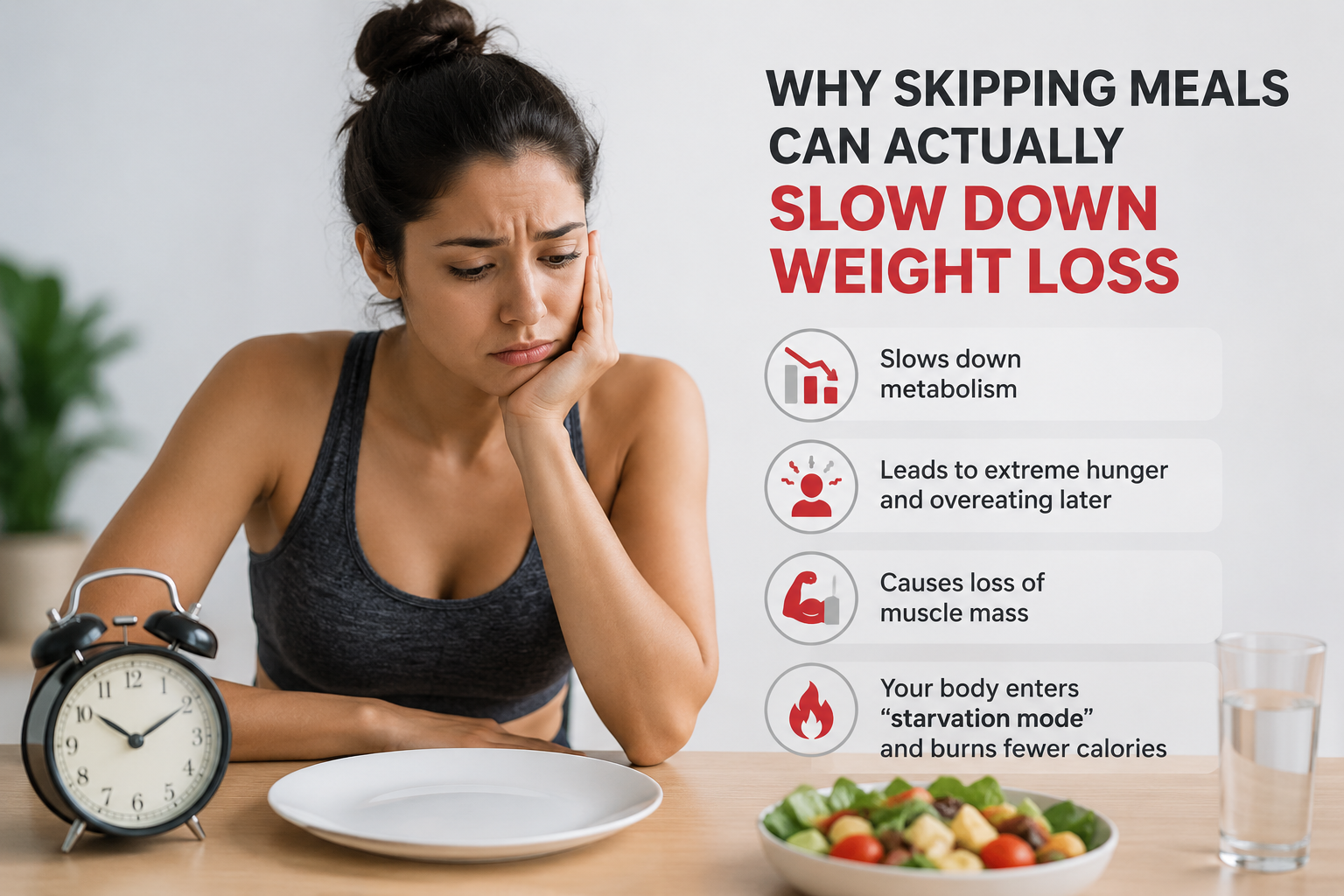
Skipping meals may seem like a quick way to cut calories, but it can increase hunger, reduce energy levels, and make sustainable weight loss more difficult.
Skipping Breakfast
-
Reduced consumption of fruits.
-
Reduced whole grains
-
Less dairy consumption
-
Later on, there should be an increase in empty calories.
Skipping Lunch
-
Less vegetable and plant-based protein consumption.
-
Lower consumption of seafood and whole grains
-
Greater dependence on refined foods.
Skipping Dinner
-
Lower protein intake
-
Less vegetables, greens, and beans.
-
Ineffective nutrient balance in the whole body.
In the long run, these nutritional deficiencies may adversely impact your health, despite losing weight.
Why Cutting Calories Doesn’t Guarantee Better Outcomes
The fact is that by not eating, you can lower the total amount of calories you consume daily. Yet, calories are not the only concern in weight loss; it is also about how your body utilizes these calories.
In case your diet does not contain the necessary nutrients:
-
Your metabolism is less efficient.
-
There can be muscle mass decrease5.
-
Fat loss slows down
Simply put, your body can become more adamant about keeping on fat, and lose muscle instead.
The Psychological Aspect of Avoiding Meals
Another way your relationship with food can be affected is by skipping meals.
Common Effects Include
-
Greater desire to eat sugar and junk food.
-
Crying, eating because of excessive hunger.
-
Binge eating later in the day
This cycle may complicate the process of having a regular and healthy eating habit.
Is It a Good Idea to Skip Meals?
Structured eating patterns such as intermittent fasting that involve the timing of meals are structured eating patterns. Nonetheless, these methods differ from the act of skipping meals at random.
The most critical difference is:
Planned fasting is centered on balanced eating in eating windows.
Skipping random meals usually results in poor meal selection and deficiencies in nutrients.
Otherwise, it can cause more harm than good, as there is a danger of skipping meals.
Healthier Alternatives to Sustainable Weight Loss
Rather than going without eating, work on developing healthy eating habits that will contribute to the long-term outcomes.
Eat Balanced Meals
Add protein, healthful fats, and complex carbohydrates to each meal to be satisfied longer.
Don’t Skip Breakfast
The nutritious breakfast might assist in managing hunger during the day and enhance attention.
Practice Portion Control
You do not have to do away with meals; you simply have to control the quantity of food.
Stay Hydrated
In some cases, thirst may be confused with hunger. Having adequate intake of water may curb unneeded snacking.
Eat regularly
Eating at normal hours will help in regulating your metabolism and energy.
Final Thoughts
Missing a meal may appear to be an easy way of reducing calories, but it usually backfires. Although you may be generally eating less, the decline in the quality of diet, hunger, and slowed metabolism can, in fact, complicate the process of losing weight.
A moderate, steady diet is much more productive, not only to lose weight, but to keep oneself in good health in the long run. For a complete roadmap on building lasting habits, check out our diet and nutrition guide.
Frequently Asked Questions (FAQs)
1. Will missing meals make it easier to lose weight?
Not necessarily. Although it might help decrease calorie consumption, it can commonly prompt overeating in the future and low-quality food, which can slow the weight loss process.
2. Do you think you do not eat breakfast?
Yes, in many cases. Missing breakfast is associated with reduced nutrient consumption and subsequent hunger later on in the day.
3. Why then am I hungrier when I miss meals?
Missing meals stimulates hunger hormones, and you are likely to feel like eating more and eating high-calorie foods.
4. Should I eat or can I skip meals in case I am doing intermittent fasting?
Yes, but then it must be done in a proper way, and you still must be consuming all the necessary nutrients within your eating window.
5. Which is the most effective eating pattern to lose weight?
The most effective and sustainable way is a balanced diet with regular meals, proper control of portions, and nutrient-rich food products.
Pingback: Why You Feel Tired After Workout (And How to Fix It) - Healthy Life Set
Pingback: Menopause Diet: 5-Day Plan for Weight Loss & Belly Fat Reduction - Healthy Life Set